Car engine parts explained for smarter repair and replacement decisions
What car engine parts do inside a modern vehicle
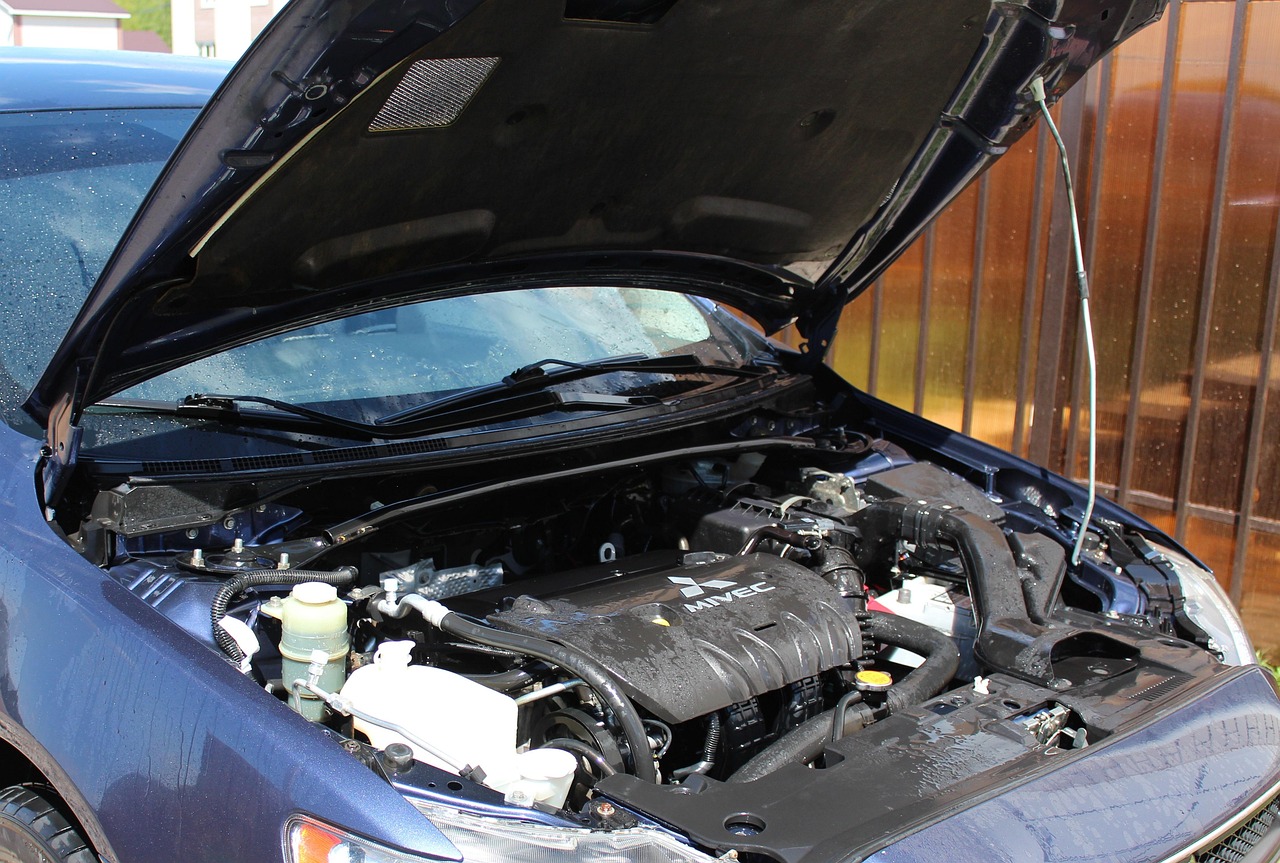
Car engine parts operate as connected systems, not as stand-alone items. In a gasoline or diesel engine, clean air must enter the engine, fuel must be metered accurately, the mixture must be compressed, combustion must be created or controlled, and that force must be converted into rotation. At the same time, the engine has to remove heat, manage friction, and clean exhaust before it leaves the vehicle.
For repair planners, workshops, fleet teams, and parts buyers, the practical point is clear: replacing the visible failed part without checking the surrounding system can lead to repeat failures. A misfire, oil leak, overheating event, rough idle, or check engine light may appear to involve one component, but the root cause often sits in the interaction between air, fuel, ignition, lubrication, cooling, emissions, and electronic control.
Public guidance from the U.S. Department of Energy describes an internal combustion engine as a system where fuel combustion occurs inside the engine and the resulting motion is transferred through the powertrain to move the vehicle. That same principle explains why small parts can have large effects. A worn seal, clogged filter, weak sensor, sticking thermostat, or incorrect gasket can change combustion quality, temperature, oil pressure, or emissions performance. For more articles in this topic area, visit the engine parts section.
The core mechanical parts that create power
The mechanical core of an engine includes the cylinder block, cylinder head, pistons, connecting rods, crankshaft, camshaft, valves, bearings, and timing system. These parts convert combustion pressure into rotating force. They are designed for long service life, but they work under heat, load, and tight tolerances, so material quality and installation accuracy matter.
Cylinder block, cylinder head, and gaskets
The cylinder block houses the cylinders as well as many oil and coolant passages. The cylinder head sits above the block and forms the combustion chamber area, intake and exhaust ports, and, in many engines, the camshaft and valve train. The head gasket seals combustion pressure, coolant, and oil from each other.
When a head gasket fails, common symptoms may include coolant loss, white exhaust smoke, overheating, oil contamination, or compression loss. These signs are not unique to a head gasket, however. Pressure testing, compression testing, and inspection should come before ordering major parts.
Pistons, rings, rods, and crankshaft
Pistons move up and down inside the cylinders. Piston rings seal combustion pressure and control oil. Connecting rods transfer piston movement to the crankshaft, and the crankshaft changes that motion into rotation. Wear in this group may appear as low compression, high oil consumption, knocking noise, metal in the oil, or loss of power.
These parts should not be selected by appearance alone. Bore size, bearing clearance, material specification, compression ratio, and engine code compatibility are critical.
Timing and valve train components
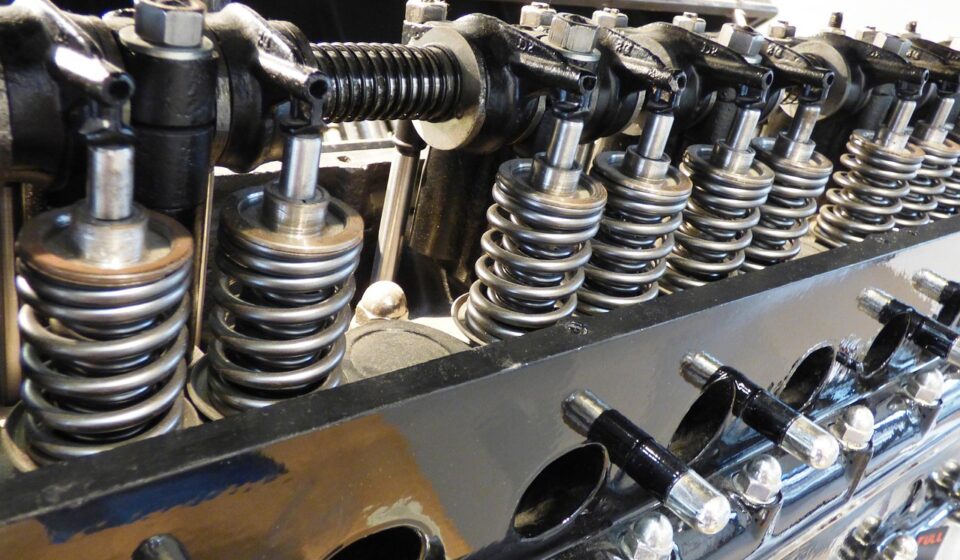
Timing chains, timing belts, guides, tensioners, sprockets, camshafts, lifters, rocker arms, and valves control when the engine breathes. Incorrect timing can cause loss of power, misfires, a no-start condition, or internal damage on interference-engine designs.
Timing components should be evaluated as a set. A new belt or chain installed with a weak tensioner, worn guide, or leaking seal may not deliver the expected repair life.
| Part group | Main job | Common warning signs | Buying note |
|---|---|---|---|
| Block and head | Hold cylinders, ports, oil, and coolant passages | Overheating, leaks, compression loss | Verify engine code, surface condition, and gasket match |
| Pistons and rings | Seal combustion and control oil | Oil burning, smoke, low compression | Check bore size, ring gap, and material specification |
| Crankshaft and bearings | Convert piston force into rotation | Knocking, low oil pressure, metal debris | Confirm journal size, bearing grade, and lubrication history |
| Timing system | Synchronize crankshaft, camshaft, and valves | Rattle, misfire, no-start, timing codes | Consider kits with guides, tensioners, seals, and hardware |
Air, fuel, and ignition parts control combustion quality
Combustion depends on the right amount of air and fuel at the right time. Many driveability complaints start in this area because the engine control module uses sensor inputs to adjust fuel delivery, ignition timing, idle speed, boost pressure, and emissions strategy.
Air intake and boost components
Air filters, intake ducts, throttle bodies, mass airflow sensors, manifold absolute pressure sensors, intake manifolds, turbochargers, intercoolers, and related hoses all influence how much air reaches the cylinders. A cracked intake boot, dirty sensor, sticking throttle plate, or boost leak can make a sound engine behave like a failing one.
Before replacing larger car engine parts such as a turbocharger or intake manifold, the surrounding hoses, clamps, vacuum lines, and sensor readings should be checked.
Fuel delivery parts
Fuel pumps, filters, injectors, rails, pressure regulators, and high-pressure pumps must supply clean fuel at the correct pressure and volume. Low fuel pressure can imitate an ignition fault, while leaking injectors can cause hard starts, rich running, fuel odor, or catalytic converter damage.
Direct-injection engines add more pressure and precision, so correct part numbers and clean installation practices are especially important.
Ignition parts for gasoline engines
Spark plugs, ignition coils, plug wires on older designs, and control modules create the spark that ignites the air-fuel mixture. Spark plug heat range, gap, thread length, and electrode design should match the engine specification.
A wrong plug may fit physically but still cause misfire, pre-ignition risk, or poor fuel economy. Coils also need careful diagnosis because a misfire code identifies a cylinder or circuit condition, not always the failed part itself.
Lubrication and cooling parts protect the engine
Heat and friction are unavoidable in combustion engines. The lubrication and cooling systems protect the moving parts that buyers most want to preserve. The U.S. Department of Energy has noted that conventional vehicles lose a large share of fuel energy as heat and other losses before energy reaches the wheels. That makes oil flow, coolant flow, and temperature control central to engine durability.
Lubrication parts include the oil pump, pickup tube, oil pan, filter, pressure sensor, cooler, seals, and gaskets. Their job is not only to reduce friction but also to carry heat and contaminants away from moving surfaces. Low oil pressure, sludge, wrong oil viscosity, neglected filters, or blocked passages can damage bearings, camshafts, turbochargers, and timing components. See also: Buying Guides.
Cooling parts include the water pump, thermostat, radiator, cooling fan, coolant temperature sensor, hoses, reservoir, heater core, and sometimes electric coolant pumps. Overheating can warp cylinder heads, weaken gaskets, degrade oil, and accelerate plastic or rubber part failure.
A thermostat stuck open may cause slow warm-up and poor heater performance. A thermostat stuck closed may cause rapid overheating. Diagnosis matters because replacing a radiator will not solve a combustion gas leak into the cooling system.
- Check the fluid history. Contaminated oil or coolant may point to deeper problems than one failed seal.
- Match materials and temperature ratings. Hoses, gaskets, and plastic housings must tolerate the engine environment.
- Inspect related parts together. A water pump repair may also justify checking belts, pulleys, tensioners, and coolant condition.
- Do not ignore warning lights. Oil pressure and temperature warnings can turn into engine-damaging events quickly.
Emission and exhaust related engine parts are not optional
Modern engines are designed to meet emissions requirements as complete systems. Oxygen sensors, air-fuel ratio sensors, catalytic converters, exhaust gas recirculation components, positive crankcase ventilation parts, evaporative emissions components, diesel particulate filters, diesel oxidation catalysts, and selective catalytic reduction components all support emissions control and engine management.
The U.S. Environmental Protection Agency states that a typical passenger vehicle emits about 4.6 metric tons of carbon dioxide per year, based on average fuel use assumptions. EPA guidance also treats catalytic converters and oxygen sensors as important emissions-related components, and federal law prohibits tampering with emissions controls, such as removing a catalytic converter without an approved replacement.
Regulations and inspection rules can vary by location, so buyers should verify local requirements before selecting exhaust or emissions-related car engine parts.
Emission parts are often misdiagnosed. A catalytic converter efficiency code does not always mean the converter should be the first part replaced. Misfires, oil burning, coolant contamination, a rich fuel mixture, or exhaust leaks can damage or confuse the converter and sensors. Replacing an expensive aftertreatment part without correcting the upstream cause can lead to another failure.
How to choose replacement car engine parts without creating new problems
The safest way to buy replacement parts is to start with the vehicle identification number, engine code, model year, market version, emissions specification, and original equipment part number where available. Many engines share a name or displacement but use different sensors, connectors, timing layouts, gasket shapes, oil pans, mounts, or emissions equipment depending on year and region.
Buyers often compare original equipment, aftermarket, and remanufactured parts. Each category can be appropriate when matched to the repair. Original equipment parts are usually selected for exact specification and predictable fit. Quality aftermarket parts can be suitable for maintenance and many repairs when the supplier clearly states compatibility and material standards.
Remanufactured components such as alternators, turbochargers, cylinder heads, or fuel injectors can reduce cost, but they require attention to testing, core condition, warranty terms, and installation requirements.
| Buying factor | Why it matters | Question to ask before ordering |
|---|---|---|
| Fitment | A part can look similar but use a different connector, seal, or calibration | Does it match the VIN, engine code, and production date? |
| System cause | Failed parts may be symptoms of overheating, contamination, or electrical faults | Has the root cause been tested, not guessed? |
| Emissions compliance | Some parts must meet legal and inspection requirements | Is the part approved for the vehicle and location? |
| Installation context | Old gaskets, bolts, fluids, or sensors can compromise a new part | What related items should be replaced at the same time? |
| Traceability | Clear labeling reduces counterfeit and specification risk | Can the seller identify brand, part number, batch, and warranty terms? |
A practical diagnostic timeline before ordering parts
A structured diagnostic process reduces unnecessary spending and helps the replacement part last. It is especially useful when symptoms overlap, such as rough idle, poor acceleration, overheating, oil leaks, or check engine lights.
- Record the symptom accurately. Note when it happens: cold start, hot idle, acceleration, highway speed, towing, rain, or after refueling.
- Scan for codes and freeze-frame data. Diagnostic trouble codes provide direction, but they do not automatically prove which part has failed.
- Inspect basic conditions. Check oil level, coolant level, air intake leaks, battery voltage, grounds, belts, hoses, and visible connector damage.
- Test the suspected system. Use compression, leak-down, fuel pressure, smoke testing, temperature readings, or scope data when appropriate.
- Identify related parts. A repair may need gaskets, seals, bolts, fluids, filters, clamps, or programming steps, not only the main component.
- Confirm the repair. Clear codes, road test, monitor data, and recheck leaks or temperatures before considering the job complete.
The key takeaway is straightforward: car engine parts should be selected after the system has been understood. That approach is usually more reliable than replacing the most visible or most commonly blamed component.
Frequently asked questions
What are the most important car engine parts to understand first?
Start with the parts that define the engine’s main systems: cylinder block, cylinder head, pistons, crankshaft, camshaft, valves, timing components, fuel injectors, ignition parts, oil pump, water pump, sensors, and emissions components. Understanding how these groups interact is more useful than memorizing a long list of individual part names.
Can a small sensor cause major engine problems?
Yes, depending on the sensor and failure mode. Sensors such as mass airflow, oxygen, coolant temperature, crankshaft position, and camshaft position sensors influence fuel mixture, timing, starting, emissions, and protection strategies. A bad sensor reading can cause poor running, but wiring, connectors, air leaks, or mechanical faults may create the same symptoms.
Are aftermarket engine parts a good choice?
Aftermarket parts can be a good choice when the specification, fitment, material quality, and compliance requirements are clear. They are not all equal. For critical parts such as timing kits, sensors, fuel components, gaskets, turbochargers, and emissions parts, buyers should avoid vague listings that do not identify exact compatibility or standards.
Should engine parts be replaced as kits or one at a time?
It depends on the system. Timing belts, chains, water pumps, gaskets, seals, and tensioners are often evaluated together because labor overlaps and one worn related part can shorten the life of the repair. Sensors and coils may be replaced individually when testing confirms only one failure, unless the vehicle history or mileage supports a broader preventive approach.
How often should engine parts be inspected?
The owner’s manual is the primary schedule, but severe driving conditions can justify more frequent checks. Short trips, high heat, dusty roads, towing, stop-and-go traffic, and poor fluid history can accelerate wear. Regular inspections of fluids, belts, hoses, filters, leaks, and warning lights help identify problems before major car engine parts are damaged.