Electrical panel components for automotive power and control systems
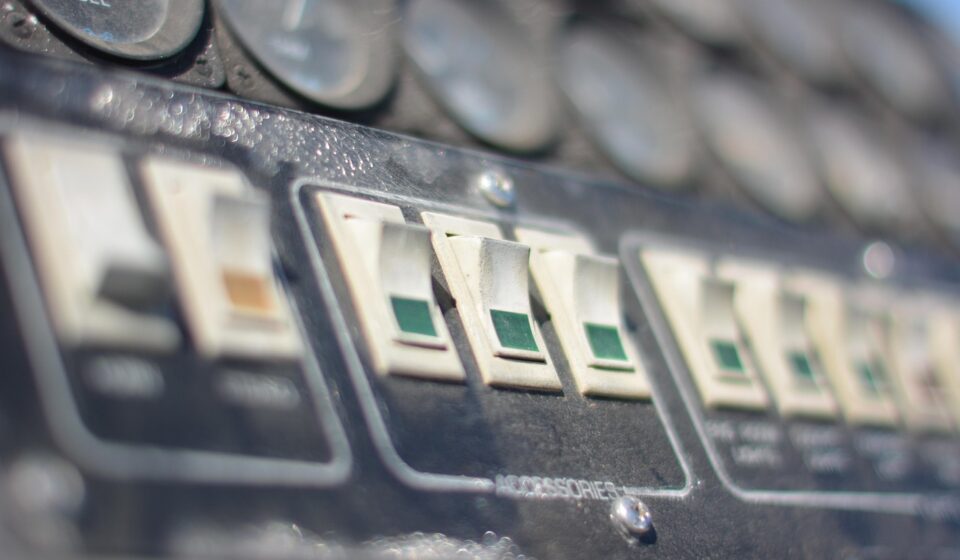
Electrical panel components distribute, protect, switch, and monitor electrical energy inside a vehicle power distribution box, auxiliary panel, junction block, or industrial control panel used around automotive equipment. In practical terms, power enters through a source or main disconnect, is divided through busbars and terminal blocks, protected by fuses or circuit breakers, and controlled through relays, contactors, sensors, controllers, and wiring.
Current rating is only one part of the selection process. Voltage, short-circuit exposure, vibration, heat, moisture, service access, labeling, and the standards that apply to the installation all affect whether a component is suitable for the job.
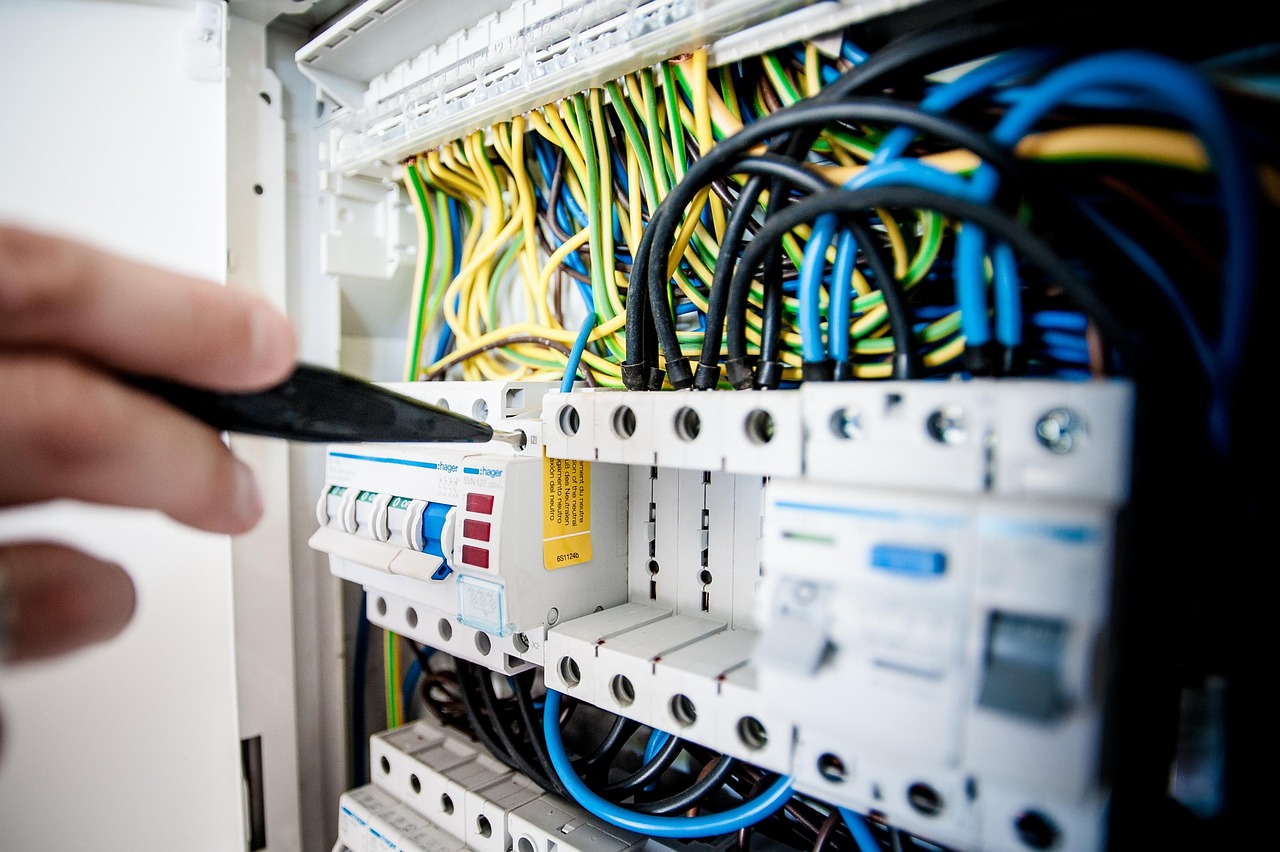
What electrical panel components do
A panel provides a controlled space for electrical distribution and control. In a vehicle, that space may be a fuse and relay box, battery distribution module, body control junction block, or upfitter auxiliary panel. In an automotive plant, it may be an industrial control panel for a conveyor, test bench, robot cell, air compressor, charger, or machine tool.
The component set changes by application, but the basic functions are similar. The panel must receive power, divide it into usable circuits, protect wires and loads from overcurrent, switch power when commanded, provide connection points for harnesses, and allow technicians to inspect and service the system. For more related topics, visit the Electrical Components category.
A useful way to evaluate any panel is to ask four questions: what feeds it, what loads it supplies, what can go wrong electrically, and how a technician will isolate and identify it during service.
Main components inside a typical electrical panel
The table below groups common electrical panel components by function. The same terms may appear in both vehicle systems and industrial controls, but ratings, approvals, and mounting methods can differ significantly.
| Component | Main function | Selection factors |
|---|---|---|
| Enclosure or housing | Protects components from contact, dirt, moisture, and mechanical damage | Material, sealing, NEMA or IP type, mounting location, heat dissipation |
| Main disconnect | Isolates incoming power for maintenance or emergency control | Voltage, current, load type, lockout capability, accessibility |
| Busbar or power distribution block | Distributes current to multiple branch circuits | Current capacity, spacing, insulation, plating, temperature rise |
| Fuses and circuit breakers | Interrupt overcurrent and help protect wiring and loads | Interrupting rating, time-current behavior, wire size, replacement access |
| Relays and contactors | Switch loads using a lower-power control signal | Coil voltage, contact rating, duty cycle, inrush current, suppression |
| Terminal blocks and connectors | Create serviceable wiring interfaces | Wire gauge, vibration resistance, current rating, keying, labeling |
| Controllers and modules | Process inputs and command outputs | Input/output count, diagnostics, communication protocol, environment |
| Grounding and bonding parts | Provide fault-current paths and reference points | Conductor size, corrosion resistance, connection integrity, inspection access |
Protection components are the first design checkpoint
Protection parts deserve early attention because a panel is only as safe as its weakest fault path. Fuses, circuit breakers, fusible disconnects, motor protection devices, surge protective devices, and overload relays all serve different roles. A fuse for a small sensor circuit is not selected the same way as a breaker feeding a motor starter or compressor.
For vehicle panels, the first practical rule is to protect the conductor as close to the source as the design allows. Battery-fed circuits can deliver high fault current, so wire gauge, routing, fuse location, and connector quality should be treated as connected design decisions. Slow-blow fuses may be suitable for loads with short inrush current, while fast-acting protection may be needed for sensitive electronics.
For industrial control panels, short-circuit current rating is a major checkpoint. NEC Article 409 requires industrial control panels to be marked with a short-circuit current rating when applicable, and UL 508A Supplement SB is widely used as a recognized method for determining that rating. This does not mean every small component sets the final rating in the same way, but it does mean the combination of protective devices and power circuit components must be evaluated as a system.
Switching and control parts shape reliability
Relays, contactors, solid-state relays, control switches, push buttons, pilot lights, timers, PLCs, and body control modules determine how the panel responds. In automotive use, relays often switch lighting, fans, pumps, horns, heaters, or auxiliary accessories. In industrial machinery, contactors and drives may control motors, actuators, conveyors, and process equipment.
A common mistake is selecting a switching device only by its steady-state current. Many loads draw a temporary inrush current when energized. Motors, lamps, solenoids, compressors, and capacitive electronic loads can stress contacts beyond the normal running current shown on a label. Load category, switching frequency, coil voltage, ambient temperature, and expected life cycle all matter.
Control wiring should also be separated logically from power wiring. This reduces troubleshooting time and can reduce noise problems in sensor and communication circuits. Well-built panels use terminal numbering, wire identification, and connector keying so service work does not depend on memory or guesswork.
Connectors, terminals, and wiring are not secondary details
Many panel failures start at connection points. Loose terminals, undersized conductors, poor crimps, corrosion, sharp bends, and unsupported harnesses create resistance, heat, intermittent signals, or open circuits. In automotive environments, vibration and temperature cycling make connection design especially important.
Terminal blocks should match conductor size, insulation type, current, and installation method. Screw terminals may require torque control. Spring-clamp terminals can improve consistency in vibration-prone installations when approved for the application. Sealed connectors may be needed where road splash, washdown, dust, or chemical exposure is expected.
Routing matters as much as component choice. High-current paths should be short, adequately sized, and protected from abrasion. Signal wires should avoid unnecessary parallel runs with noisy power conductors. Service loops should provide enough length for maintenance, but not so much slack that wires rub against doors, fans, hinges, or sharp metal edges. See also: Buying Guides.
Enclosure, heat, and environment determine service life
The enclosure is not just a box. It defines the boundary for touch protection, environmental protection, mounting strength, thermal behavior, and service access. A panel inside a passenger compartment faces different risks from one mounted under a hood, under a chassis, in a repair bay, or beside automated production equipment.
NEMA enclosure types and IEC IP codes are commonly used to describe degrees of protection against contact and environmental ingress. These rating systems are not identical, so a rating should be checked against the actual exposure. Indoor dust, outdoor rain, oil mist, road salt, washdown spray, and battery-area corrosion are different design cases.
Heat is another limiting factor. Every energized conductor, fuse, relay, contactor, power supply, and controller generates some heat. A tightly packed panel near an engine, charger, motor drive, or sun-exposed body panel may need more spacing, ventilation, derating, heat sinking, or relocation. If heat is ignored, a panel may pass a simple functional test and still fail early in real service.
Standards and safety checks to consider
Standards do not replace engineering judgment, but they provide a framework for avoiding predictable hazards. In the United States, OSHA 29 CFR 1910.303 requires electrical equipment used in the workplace to be acceptable for the application, and it requires live parts operating at 50 volts or more to be guarded against accidental contact except where otherwise permitted. OSHA 29 CFR 1910.147 addresses control of hazardous energy during servicing and maintenance.
For industrial panels, UL 508A covers industrial control panels, while NEC Article 409 addresses industrial control panel requirements in the National Electrical Code. NFPA 79 applies to electrical equipment of industrial machinery, and IEC 60204-1 is an important international reference for electrical equipment of machines. The applicable edition and legal adoption can vary by jurisdiction, customer specification, and equipment type.
For vehicle electrical panels, the situation is more platform-specific. OEM requirements, harness standards, fuse coordination, environmental validation, and safety requirements may be more relevant than building-wiring rules. A part that is acceptable in a 12 V or 24 V vehicle accessory panel is not automatically acceptable inside a listed industrial control panel, and the reverse is also true. The practical takeaway is to match the component approval and test basis to the actual installation.
A practical selection checklist
- Confirm the system voltage, maximum continuous current, peak inrush current, and expected fault current.
- Match protection devices to conductor size, load behavior, and interrupting requirements.
- Check whether the panel is a vehicle junction box, auxiliary power panel, industrial control panel, or machinery panel.
- Choose enclosure protection for the real environment, not only for a catalog description.
- Verify connector sealing, retention, temperature range, and vibration resistance.
- Leave space for heat, wire bending, labeling, inspection, and future service.
- Separate high-current, low-voltage signal, communication, and safety circuits where practical.
- Document ratings, wire IDs, fuse values, terminal numbers, and isolation points.
- For workplace equipment, involve qualified electrical personnel and the authority having jurisdiction where required.
A strong panel design is usually easy to understand when the cover is opened. The feed path is clear, protective devices are accessible, labels match the drawings, and wiring is routed with purpose. That clarity reduces downtime and helps prevent unsafe improvisation during repairs.
Frequently asked questions
What are the most important electrical panel components?
The most important components are the enclosure, main power connection or disconnect, busbar or distribution block, fuses or circuit breakers, relays or contactors, terminals, connectors, wiring, grounding or bonding parts, and control modules. Their importance depends on the application, but protection and connection quality usually have the greatest impact on safety and reliability.
Are vehicle fuse boxes and industrial control panels the same thing?
No. They share some functions, including power distribution and circuit protection, but they are designed for different environments and rules. A vehicle fuse box is built around vehicle packaging, vibration, service, and OEM requirements. An industrial control panel may need to meet NEC, UL 508A, NFPA 79, OSHA, and local inspection requirements.
Why is short-circuit current rating important?
Short-circuit current rating indicates the level of fault current a panel or component combination is designed to withstand under specified conditions. If available fault current is higher than the panel rating, a fault can cause severe damage. This is why industrial control panels are evaluated as systems rather than as a random collection of parts.
How often should electrical panel components be inspected?
Inspection frequency depends on duty cycle, environment, safety requirements, and manufacturer instructions. Panels exposed to vibration, heat, moisture, road salt, washdown, or heavy cycling need closer attention. Typical inspection points include loose terminals, discoloration, cracked housings, corrosion, damaged insulation, incorrect fuse replacement, and unreadable labels.