HARTING electrical connectors for automotive electrical systems and EV infrastructure

Why HARTING connectors matter in automotive electrical work
For engineers and buyers evaluating HARTING electrical connectors, the main question is where the connector has to work. HARTING is most relevant when a vehicle, charger or production asset needs a rugged, serviceable interface for power, signal, data or a mixed connection. The brand is closely associated with Han rectangular industrial connectors, M12 and other circular connectors, EV charging cables and high-current interfaces for electrification equipment.
These products are not universal replacements for every automotive plug. They are specified when electrical rating, IP protection, vibration behavior, mating cycles, installation time and standards alignment justify a detachable interface. This guide explains where the main families fit, how to read the specifications and which checks matter before specifying them for automotive electrical systems or EV infrastructure. For related background, see our electrical components category.
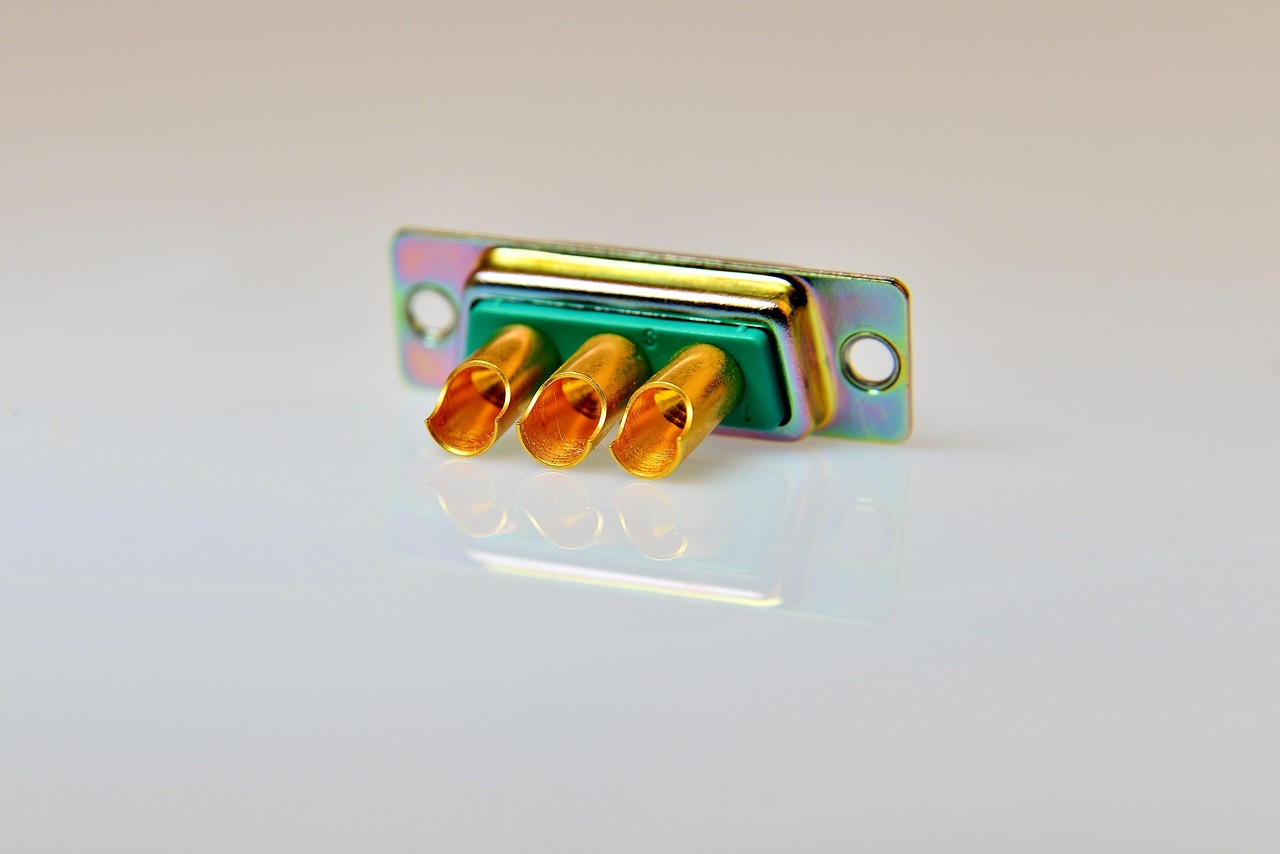
Application fit is the deciding factor. A connector used on a robot cell in a vehicle assembly plant faces different approval, temperature, fluid, packaging and service requirements from a connector mounted inside a road vehicle. HARTING product literature is strongest in industrial connectivity, factory automation, transportation, commercial e-mobility, charging equipment and energy infrastructure. That makes the brand especially relevant to EV charging systems, production-line modularization, test benches, robotics, battery service equipment, depot charging and selected commercial vehicle interfaces.
Main HARTING connector families to understand
Han rectangular and Han-Modular connectors
HARTING describes its Han rectangular connectors as modular, robust connector systems for transmitting power, signal and data in industrial applications. The value is not only the rectangular housing. It is the ability to combine housings, inserts, contacts, frames and accessories into a detachable interface that can be assembled, serviced and documented as a system. In Han-Modular systems, different media can be combined in one connector, including power, signal, data and, in some configurations, pneumatic connections. That can be useful when a machine module, test fixture or vehicle production line needs fast installation and repeatable service access.
In automotive-related environments, Han connectors are often considered for production equipment, assembly fixtures, battery test systems, charging cabinets, heavy-duty vehicle interfaces and modular machinery. They can reduce hardwiring complexity because a subsystem can be unplugged rather than rewired. However, the selected insert, housing, locking system, cable gland, seal and contact must be checked together. A high IP housing does not automatically make the full cable assembly suitable for vibration, washdown, high voltage or vehicle-road exposure.
M12, circular and ICC-style interfaces
M12 circular connectors are widely used in industrial sensors, actuators, Ethernet, IO-Link and machine connectivity. IEC 61076-2-101:2024 describes screw-locking M12 connectors from 2-way to 17-way configurations, including data transmission up to 100 MHz and signal or power transmission up to 250 V rated voltage and 4 A per contact within that standard scope. HARTING also lists M12 products with IP65 or IP67 ratings in mated condition, depending on the exact version.
For heavier automation and robotics, HARTING has expanded circular connector options such as ICC 20. HARTING product news published on March 31, 2025 described ICC 20 additions with hybrid inserts and a single-pole power connector version rated up to 400 A and 600 V for energy-intensive machines such as heavy-load robot arms or welding robots. For automotive plants, the lesson is straightforward: circular connectors can range from compact signal interfaces to much higher-current industrial power connections, so the family name alone is never enough for specification.
EV charging and high-current electrification connectors
HARTING also publishes e-mobility product information for charging cables and vehicle plugs. A specific Type 2 charging cable data sheet lists variants for single-phase and three-phase AC charging, including 20 A and 32 A versions and charging power examples from 4.7 kW to 22 kW depending on the phase and current configuration. A specific CCS Gen2 Type 2 vehicle plug page lists 225 kW charging power, 30,000 mating cycles, IP44 in mated condition and IP69 for the housing area. These figures are useful reference points, but they are product-specific and should not be generalized to every HARTING charging connector.
High-current infrastructure is also moving beyond passenger-car charging. HARTING’s November 5, 2025 information for Han S 450 Plus discussed energy storage connector ratings up to 500 A and 2,000 VDC. That reflects a broader electrification trend in storage and charging infrastructure. It does not mean the same connector is automatically approved for an EV traction battery pack; it means high-current interfaces are becoming more compact, modular and service-oriented in adjacent systems.
Where these connectors fit in automotive and EV systems
| Application area | Relevant connector type | Why it may be considered | Main caution |
|---|---|---|---|
| Vehicle assembly robots | M12, ICC, Han rectangular | Supports detachable power, signal and data for end effectors, sensors and tooling | Check dynamic cable movement, EMC and vibration requirements |
| Battery test benches | Han-Modular, high-current Han variants | Combines measurement, control and power interfaces in serviceable modules | Validate voltage class, creepage, clearance and interlock architecture |
| EV charging stations | EV charging cables, CCS or Type 2 products, cabinet connectors | Provides standardized conductive charging and rugged field handling | Connector standard, regional market and certification must match deployment |
| Commercial electric vehicles | Circular connectors, rectangular connectors, charging interfaces | Useful for harsh environments, modular drive systems and depot charging | Do not substitute industrial ratings for vehicle qualification without test evidence |
| Production-line modular machinery | Han rectangular and Han-Modular | Reduces hardwiring and supports fast replacement of machine modules | Document pinout, coding, service procedure and spare-part compatibility |
| On-board low-voltage harnesses | Application-specific only | May apply in special equipment or commercial platforms | Standard automotive sealed connectors may be more appropriate for mass-production harnesses |
Specifications that should drive selection
Electrical rating and derating
Current and voltage ratings are starting points, not final approval. Real performance depends on conductor size, contact material, plating, ambient temperature, number of loaded contacts, enclosure heat buildup, duty cycle and installation quality. In a charging cabinet or battery service interface, thermal rise can be more important than a headline current rating. Engineers should compare the product data sheet with the worst-case operating profile, not only the nominal current value.
For EV charging accessories, IEC 62196-1:2025 applies to EV plugs, socket-outlets, vehicle connectors, vehicle inlets and cable assemblies for conductive charging systems. Its scope includes accessories up to 690 V AC at 250 A and up to 1,500 V DC at 800 A. Those are standard-scope limits, not ratings for every product. The actual HARTING part number may be much lower or configured for a specific regional charging interface.
Ingress protection and road-vehicle exposure
HARTING lists some Han rectangular connector configurations with protection classes up to IP68 or IP69 depending on the version, and some circular families list IP67 or IPX9 variants. For road vehicles, ISO 20653:2023 defines degrees of protection for electrical equipment against foreign objects, water and access. This matters because an IP code applies only under defined test conditions and connector states. A connector may have one rating when mated, another when unmated and another for a specific housing area.
Automotive users should also consider fluids, salt spray, temperature cycling, UV exposure, cable strain, pressure washing, stone impact and technician handling. A connector that performs well inside an electrical cabinet may need additional sealing, shielding or mechanical protection if it is moved to an exposed vehicle location.
Locking, coding and serviceability
In busy production plants and charging depots, the connector must be hard to mis-mate and easy to service. Coding options, lever locks, screw locks, bayonet locks, double locking and visual color coding can all reduce error. HARTING’s high-current storage connector information highlights color and coding options for polarity management. For automotive use, these mechanical details should be reviewed together with work instructions and maintenance access, not treated as minor accessories. See also: Buying Guides.
Termination quality
Connector reliability often depends on termination quality as much as brand selection. Crimp, screw, cage-clamp, solder, push-in and pre-assembled cable options each have trade-offs. HARTING supplier literature for Push-In technology has discussed assembly-time reduction claims up to 30 percent in certain connector assembly tasks. Treat such claims as application-dependent: they may help when many identical field terminations are required, but crimped or pre-tested assemblies may still be preferable for high-volume, high-vibration or high-current applications.
Standards landscape in 2026
Standards help define expectations, but they do not replace part-level validation. For M12 connectors, IEC 61076-2-101:2024 is relevant to screw-locking circular connectors and their coding, contact arrangements and electrical scope. For EV charging, IEC 62196-1:2025 is the key general standard for conductive charging accessories, while related parts of IEC 62196 and IEC 62893 cover specific configurations and EV charging cables. HARTING product pages for charging cables commonly list IEC 62196 and IEC 62893 references where applicable.
In North America, the connector discussion also includes SAE J1772, CCS1 and SAE J3400, commonly associated with NACS. Public guidance from the U.S. Joint Office of Energy and Transportation describes a transition period in which CCS1 and J3400 connectors can coexist across vehicles and charging infrastructure. That matters for purchasing because a charging connector decision is partly technical and partly regional. A fleet depot, public charger, export vehicle or service tool may need different interfaces.
For vehicle-mounted high-voltage connectors, ISO 20076:2019 addresses test methods and performance requirements for voltage class B connectors, while OEM-specific validation programs may add vibration, thermal shock, chemical, flammability, shielding and service-disconnect requirements. If a data sheet does not state a required standard or approval, assume it still needs confirmation.
How to avoid common selection mistakes
- Do not specify only by brand or series. HARTING Han, M12, ICC and charging products cover many ratings and mechanical formats.
- Separate industrial automation from on-road vehicle use. A connector suitable for a welding robot is not automatically suitable for a vehicle chassis harness.
- Check mated and unmated protection. IP ratings may change when the connector is unplugged or capped.
- Review complete assemblies. Contacts, insert, housing, seal, cable gland, backshell, cable and termination must work as one system.
- Confirm regional charging standards. Type 2, CCS, J1772 and J3400 decisions depend on market, vehicle inlet and infrastructure plan.
- Plan spare parts and documentation. Modular connectors help only if pinouts, coding, torque values, crimp tools and replacement parts are controlled.
The strongest use case for HARTING electrical connectors is not simply ruggedness. It is controlled modularity: the ability to make an electrical subsystem detachable, repeatable and serviceable while maintaining the required power, signal, data and environmental performance. That can be valuable in EV infrastructure, automotive automation and commercial e-mobility, but it still requires disciplined specification.
Frequently asked questions
Are HARTING Han connectors the same as HARTING electrical connectors?
No. HARTING is the manufacturer, while Han is one of its major industrial connector families. HARTING electrical connectors can also include circular connectors, M12 products, PCB connectors, industrial Ethernet interfaces, charging connectors and cable assemblies.
Are HARTING connectors used inside cars?
Some HARTING technologies are relevant to vehicles, commercial e-mobility and charging systems, but many Han and M12 products are primarily industrial. For mass-production vehicle harnesses, engineers must confirm the exact part’s automotive qualification, environmental rating and OEM approval before using it inside a road vehicle.
What is the difference between rectangular and circular HARTING connectors?
Rectangular connectors such as Han are often chosen for modular power, signal and data interfaces in cabinets, machines and heavy-duty equipment. Circular connectors such as M12 or ICC-style products are often chosen for compact sensors, actuators, robotics, machine power and harsh-environment interfaces. The right choice depends on current, contact count, space, locking, sealing and service access.
Do EV charging connectors follow the same standards as factory automation connectors?
No. EV charging connectors are governed by charging-specific standards such as the IEC 62196 series, IEC 62893 cable requirements and regional standards such as SAE J1772 or SAE J3400. Factory automation connectors may follow different IEC connector standards and machine safety requirements.
What should be checked first when comparing HARTING connector options?
Start with voltage, current, contact count, cable size, operating temperature, IP rating, vibration, mating cycles, termination method and required standard. Then check whether the complete assembled connector, not just one component, is validated for the intended automotive or EV infrastructure environment.