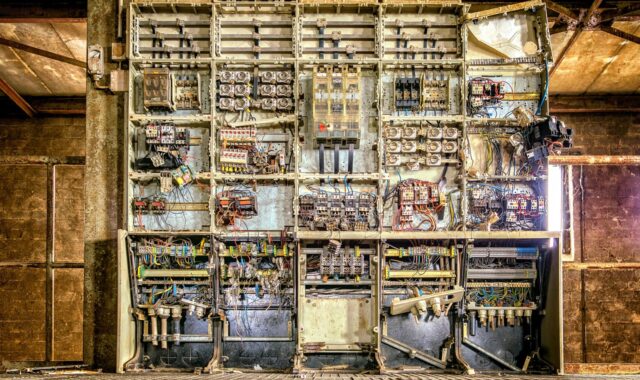
Breaker box components explained for safer power distribution

What a breaker box does
Breaker box components divide one incoming electrical supply into protected branch circuits. In residential and light commercial work, the same assembly may be called a breaker box, breaker panel, load center or panelboard. Whatever the name, its job is to route power, provide overcurrent protection, organize conductors, and create an enclosure that can be inspected and serviced safely.
A breaker box is a listed assembly, not a set of interchangeable parts. UL Solutions identifies UL 67 as the basic product standard used for panelboards, while manufacturer literature from companies such as Eaton describes typical panelboard elements as the enclosure, interior, circuit protection devices, labels, dead front, trim and filler plates. The visible breaker handles are only one part of that system.

For more electrical terminology and component explainers, visit the Electrical Components section.
Core breaker box components and their functions
A practical way to read a breaker box is to group the parts by function. Some parts carry current, some protect conductors, some organize terminations, and others reduce exposure to energized parts. The table below covers the components most often identified during panel inspection or replacement planning.
| Component | Main function | What it helps verify |
|---|---|---|
| Main breaker | Disconnects and protects the entire panel when the panel is designed with a main breaker. | Service rating, shutoff location and panel capacity. |
| Branch circuit breakers | Protect individual branch circuit conductors from overload and short-circuit conditions. | Circuit rating, breaker type and wire compatibility. |
| Bus bars | Distribute power from the incoming feed to the installed breakers. | Breaker fit, stab condition and current path. |
| Neutral bar | Terminates grounded neutral conductors. | Neutral organization and isolation requirements. |
| Ground bar | Terminates equipment grounding conductors. | Fault-current path and grounding connections. |
| Main lugs | Receive incoming conductors where the panel is not using a main breaker as the disconnect. | Feeder connection and conductor size limits. |
| Enclosure | Houses the energized and mechanical parts. | Indoor or outdoor rating, corrosion and physical damage. |
| Dead front and trim | Cover energized internal parts while allowing access to breaker handles. | User protection and proper panel closure. |
| Labels and directory | Identify ratings, accepted breaker types and circuit assignments. | Safe replacement and troubleshooting. |
| Filler plates | Close unused breaker openings in the dead front. | Protection from accidental contact with live parts. |
Main breakers, branch breakers and protective devices
The main breaker is often the highest-rated visible switching device in the panel. In a typical main breaker panel, it can disconnect power to the panel’s branch breakers and helps keep the panel operating within its rating. Not every panel has one, however. Some panels are main lug only and are fed from an upstream disconnect, so the panel label and installation context matter.
Branch circuit breakers protect the wiring connected to individual circuits. Their ampere rating must match the conductor size and the load served. Installing a larger breaker is not an upgrade if the branch wiring is not rated for it. Breakers also need to match the panel’s listed breaker types. A breaker that appears to snap into place can still be unsuitable if it is not identified for that panelboard by the manufacturer or applicable listing.
Modern panels may also use specialty breakers. Ground-fault circuit interrupter protection and arc-fault circuit interrupter protection are required in many locations and applications, but the exact requirements depend on the adopted electrical code, occupancy type and circuit use. These devices add sensing and trip functions beyond basic thermal-magnetic overcurrent protection. They should be selected and installed according to the panel label, breaker instructions and local code requirements.
Bus bars, neutrals, grounds and bonding points
Bus bars are the internal conductors that distribute power across the panel interior. They may be copper or aluminum, depending on the panel design. A breaker connects to the bus through a mechanical contact point, often called a stab. Heat discoloration, pitting, loose fit or arcing marks around these contact points are warning signs that call for qualified inspection.
The neutral bar and ground bar are often confused because they can look similar. The neutral bar carries return current for grounded conductors during normal circuit operation. The ground bar connects equipment grounding conductors, which are intended to carry current only during fault conditions. At service equipment, neutral-to-ground bonding may be part of the system design. In most downstream subpanels, the neutral bar is isolated and the grounding bar is bonded to the enclosure. This distinction affects shock risk, fault clearing and unwanted current paths.
The bonding screw or bonding strap is a small part with a large safety role. It connects the neutral system to the metal enclosure only where the installation design permits it. Because incorrect bonding is a common source of unsafe panel conditions, it should not be changed based on appearance alone. The panel wiring diagram, local code adoption and service location all influence the correct configuration.
Enclosure, dead front, labels and filler plates
The enclosure provides the mechanical boundary for the breaker box. Its rating matters because an indoor panel is not automatically suitable for a damp garage wall, outdoor wall or corrosive environment. Knockouts must be closed with approved fittings or plugs, and cable entries need connectors that protect insulation from sharp metal edges.
The dead front is the cover behind the outer door that exposes only the breaker handles and hides energized internal parts. Missing screws, damaged trim or open breaker spaces can create contact hazards. Filler plates are not decorative; they close unused openings where a breaker could be installed. If a panel has open slots, the filler plate should match the panel family.
Labels are another important breaker box component. The factory label lists voltage, maximum ampere rating, short-circuit current rating, accepted breaker types, torque information and other instructions. The circuit directory tells users which breaker controls which load. A clear directory reduces troubleshooting time and supports emergency shutoff decisions, especially where multiple panels or subpanels are present. See also: Buying Guides.
Inspection, replacement and upgrade considerations
Breaker box work is not a place for guesswork. Before any cover is removed, the person performing the work needs appropriate training, tools and lockout or de-energizing procedures. OSHA electrical safety rules emphasize maintaining clear working space around electrical equipment, which is why storing tools, boxes or vehicle parts directly in front of a panel is poor practice even before any repair begins.
When assessing a breaker box, a qualified person looks beyond whether the lights still turn on. Warning signs can include warm breaker handles, repeated trips without an obvious overload, buzzing, rust, water staining, missing knockouts, doubled conductors where the terminal is not rated for them, damaged insulation, mixed breaker brands, blank spaces without filler plates and unreadable labels. Any of these conditions can point to a component mismatch or deterioration problem.
Replacement parts should be selected from the panel label and manufacturer documentation, not from visual similarity. This applies to breakers, ground bar kits, neutral assemblies, filler plates and lugs. Torque values also matter: an under-tightened termination can overheat, while an over-tightened one can damage the conductor or terminal. For older panels with obsolete breakers, the safer question is not only whether a part can be found, but whether it is listed for that equipment and suitable for the available fault current.
How this compares with automotive electrical distribution
Automotive electrical systems use related principles but different hardware. A vehicle fuse box or power distribution module may include fuses, relays, fusible links, circuit breakers, bus bars and terminals. It protects lower-voltage DC circuits rather than building AC branch circuits. The vocabulary overlaps, but a household breaker box component should not be treated as interchangeable with an automotive electrical component. In both cases, the key principles remain the same: correct rating, secure connection, suitable enclosure and clear circuit identification.
Frequently asked questions
What are the most important breaker box components?
The essential components are the main breaker or main lugs, branch circuit breakers, bus bars, neutral bar, ground bar, enclosure, dead front, labels and filler plates. Each part supports a different safety or distribution function, so a complete panel inspection should not focus only on breaker handles.
Is a breaker box the same as a fuse box?
Not exactly. Both distribute electrical power and protect circuits, but a breaker box uses resettable circuit breakers while an older fuse box uses replaceable fuses. The broader function is similar, but the components, replacement practices and service procedures are different.
Can I replace a breaker with any breaker of the same amperage?
No. The amperage rating is only one requirement. The breaker must be the correct type for the panel, suitable for the circuit, and consistent with the panel label and local code. A breaker that physically fits is not necessarily approved for that panel.
Why are neutrals and grounds separated in many subpanels?
Neutral conductors normally carry return current, while equipment grounding conductors are intended for fault-current paths. In most downstream subpanels, separating them helps prevent normal neutral current from flowing on grounding paths and metal enclosures. The correct arrangement depends on the service location and applicable code.
What should be checked after a breaker trips repeatedly?
Repeated trips can indicate overload, short circuit, ground fault, arc fault, a failing breaker or a connected equipment problem. The load on the circuit, conductor condition, breaker type and panel connections should be checked by a qualified person rather than simply resetting the breaker again and again.