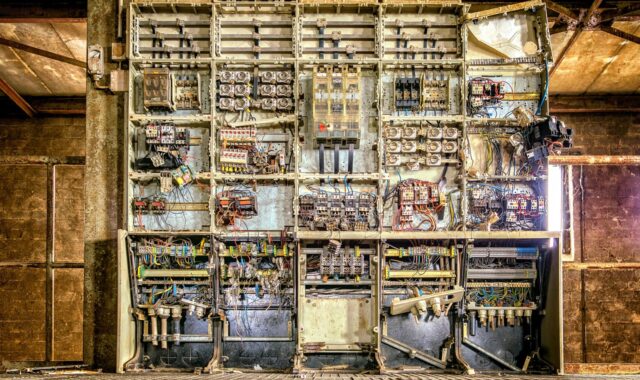
Electrical control panel components list for automotive and industrial systems
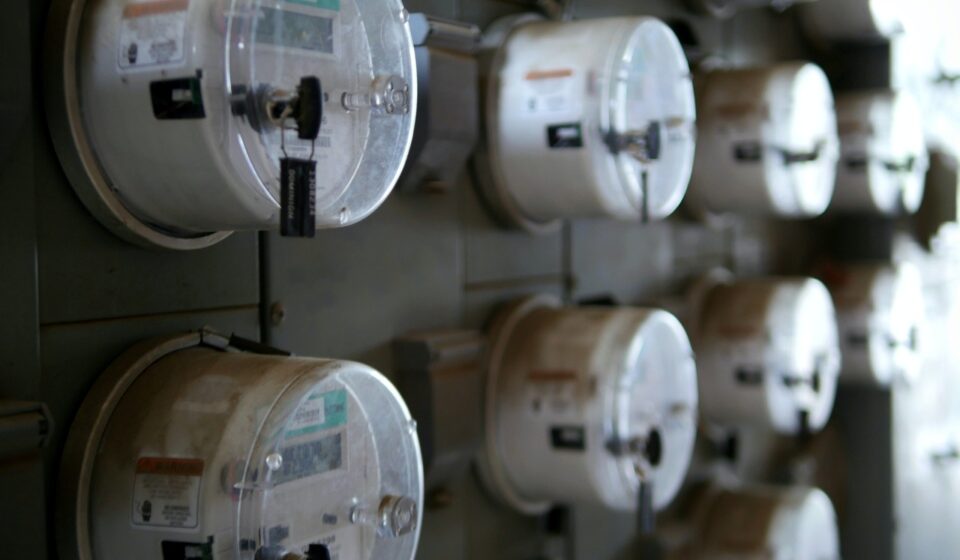
What belongs on an electrical control panel components list
An electrical control panel components list is not just a purchasing checklist. It is a structured bill of materials that shows how incoming power is isolated, protected, distributed, controlled, monitored, and serviced. A complete list normally covers the enclosure, disconnecting means, overcurrent protection, control power supply, contactors, relays, PLC or controller, terminal blocks, wiring, grounding, labels, HMI devices, pilot lights, sensors, and communication hardware. For automotive and mobile equipment, the same basic logic applies, but the design often gives more weight to low-voltage DC circuits, vibration resistance, sealed connectors, battery protection, and serviceability in compact spaces. For related component topics, see the Electrical Components section.
The exact list depends on voltage, load current, environment, control method, applicable code, and whether the panel is used on a machine, vehicle, charging system, test bench, production line, or auxiliary subsystem. In the United States, NEC Article 409, UL 508A methods, NEMA enclosure type guidance, and OSHA energy-control rules are common reference points for industrial panels. Vehicle and mobile applications may also involve automotive environmental and connector standards. The practical goal is the same in each case: every component should have a clear electrical purpose, a suitable rating, and a documented location in the schematic.
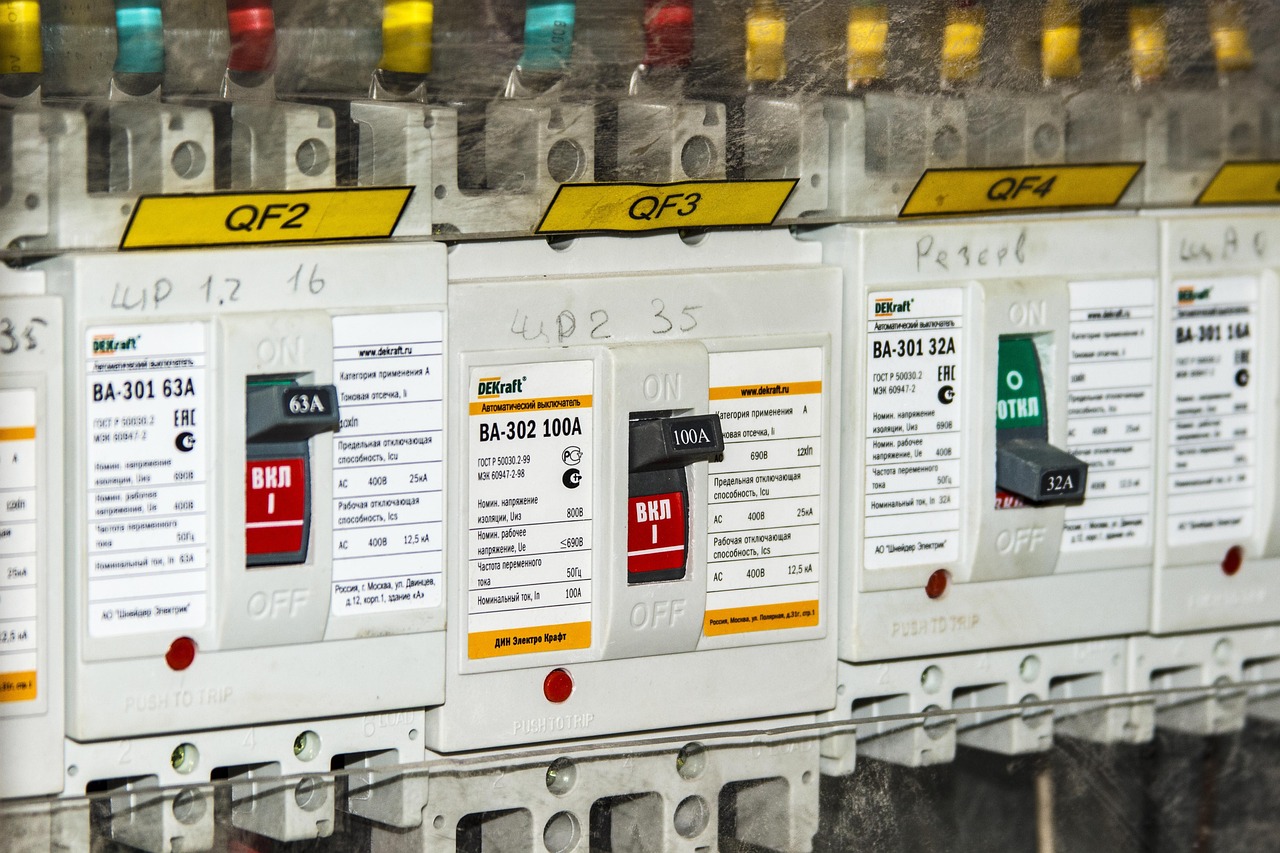
Core power and protection components
The power section receives energy and distributes it to the connected loads. Many panel risks begin here. Undersized protection, incorrect conductor selection, weak grounding, or missing isolation can turn a simple control box into a maintenance hazard.
| Component | Main purpose | Key selection checks |
|---|---|---|
| Main disconnect switch | Provides a visible or defined means to isolate incoming power before service | Voltage, current, poles, lockout provision, handle location, enclosure rating |
| Circuit breaker or fuse | Protects conductors and equipment from overcurrent and short-circuit conditions | Interrupting rating, trip curve or fuse class, coordination, load type |
| Branch circuit protection | Separates protection for motors, power supplies, heaters, lighting, and auxiliary loads | Individual load current, wire size, inrush current, maintenance access |
| Surge protective device | Limits transient overvoltage from switching events or external disturbances | System voltage, grounding, installation location, replacement indicator |
| Power distribution block or busbar | Distributes incoming or converted power to multiple branch circuits | Ampacity, spacing, touch protection, terminal capacity, SCCR data |
| Grounding and bonding hardware | Provides a low-impedance fault path and bonds metal parts | Conductor size, bonding jumpers, paint removal at bonding points, labeling |
For industrial control panels, short-circuit current rating, often called SCCR, needs specific attention. UL 508A Supplement SB is widely used as a method for determining panel SCCR. The rating is not simply the rating printed on the main breaker. It is affected by power-circuit components, protective-device combinations, current-limiting devices, and the weakest applicable rating in the circuit. For that reason, the component list should record manufacturer part numbers, ratings, and documentation sources instead of relying on generic descriptions such as breaker, relay, or terminal.
In automotive and mobile systems, the same protection principle appears through blade fuses, MIDI or MEGA fuses, resettable circuit breakers, fusible links, battery disconnects, and protected power distribution modules. The main difference is that the system may be 12 V, 24 V, 48 V, or high-voltage DC in electrified platforms. Arc behavior, connector design, and service isolation therefore require application-specific engineering review.
Control, automation, and signaling components
The control section determines what the panel does after power is available. A simple panel may use only relays and switches. A more advanced panel may combine PLC logic, a human-machine interface, networked I/O, motor drives, sensor inputs, and remote diagnostics.
| Component | What it does | Typical notes for the list |
|---|---|---|
| Control transformer or DC power supply | Converts incoming power to a usable control voltage | Input range, output voltage, current capacity, protection, heat dissipation |
| PLC, controller, or ECU | Executes logic and coordinates input/output signals | I/O count, scan requirements, communication ports, program backup |
| Relays and interface modules | Switch signals, isolate circuits, or expand outputs | Coil voltage, contact rating, socket type, suppression method |
| Contactors | Switch motors, heaters, lighting banks, or other power loads | Load category, coil voltage, auxiliary contacts, mechanical endurance |
| Motor overload relay | Protects motors against overload conditions | Motor full-load current, reset method, trip class, coordination with contactor |
| Variable frequency drive or soft starter | Controls motor speed or reduces starting stress | Motor rating, enclosure ventilation, EMC considerations, braking requirements |
| Push buttons, selector switches, and pilot lights | Provide operator input and status indication | Color, legend, contact blocks, illumination voltage, ingress protection |
| Emergency stop device | Provides a fast operator-initiated stop function where required by the risk assessment | Stop category, safety relay or safety PLC interface, reset logic, location |
| HMI display | Shows alarms, settings, trends, or operating status | Screen size, communication protocol, environmental rating, user permissions |
| Communication module | Connects the panel to other controllers or monitoring systems | Protocol, shielding, grounding, cybersecurity policy, diagnostic access |
A good components list separates power devices from control devices. This helps engineers evaluate SCCR, helps technicians troubleshoot faster, and helps purchasing teams avoid substitutions that look similar but do not carry the required rating or approval. A relay used for a dry signal, for example, is not equivalent to a contactor switching a motor load, even if both appear as switching devices in the schematic.
Enclosure, wiring, and layout items that are easy to underestimate
The enclosure is not just a box. It defines the environmental protection, operator access, heat behavior, and mechanical life of the panel. NEMA enclosure types are commonly used in North America to describe protection levels such as indoor general purpose, outdoor rain exposure, washdown conditions, corrosion resistance, dust, oil, and coolant. IP ratings are also common internationally. The correct choice depends on where the panel will actually be installed, not only on the electrical rating of the devices inside.
A practical components list should include the enclosure body, back panel, door hardware, hinges, gasket, locking mechanism, viewing window if used, gland plate, cable glands, drain or breather devices where appropriate, and any fans, filters, heaters, or thermostats needed for temperature and condensation control. For mobile and vehicle-mounted panels, vibration, water splash, road salt, pressure washing, and temperature cycling may be more important than the assumptions used for an indoor factory cabinet.
Wiring and layout parts also need their own line items. DIN rails, wire duct, ferrules, crimp terminals, ring lugs, cable ties, shield clamps, terminal markers, wire labels, engraved nameplates, warning labels, and schematic holders all affect long-term serviceability. They can look minor during purchasing, but missing labels or poor wire management can add hours to troubleshooting after installation.
Good layout practice usually separates high-voltage or high-current wiring from sensitive signal wiring, provides enough bending space at terminals, keeps heat-producing devices away from temperature-sensitive electronics, and leaves safe working space for inspection. If future modifications are likely, the list should also record spare terminals, spare I/O, and physical expansion space.
How automotive and mobile equipment panels differ
Automotive electrical control panels and mobile equipment junction boxes often share components with industrial panels, but the operating priorities are different. A factory panel may sit indoors for years with stable power and controlled temperature. A vehicle control box may face vibration, engine heat, battery voltage dips, jump-start events, moisture, dust, and frequent service access.
For that reason, an automotive-focused list often includes sealed connectors, automotive relays, fuse holders, battery distribution modules, CAN bus or LIN bus interfaces, harness clamps, grommets, braided sleeving, shielding, ground studs, diagnostic connectors, and clearly defined chassis ground points. Connector selection is especially important because intermittent connections can be harder to diagnose than a fully failed component.
Low-voltage DC systems also change the way designers think about voltage drop. A small voltage loss that might be acceptable in a higher-voltage AC control circuit can be significant in a 12 V system. The list should therefore include conductor gauge, circuit length assumptions, terminal type, and expected load current for critical circuits such as pumps, fans, lamps, actuators, sensors, and control modules.
Electrified vehicles and high-voltage battery systems introduce additional requirements and should not be treated as ordinary accessory wiring. Service disconnects, insulation monitoring, contactor control, pre-charge circuits, orange high-voltage identification, and interlock loops require qualified design review. If a panel list is being prepared for high-voltage vehicle equipment, the safer approach is to treat it as a separate engineering package rather than an extension of a 12 V accessory panel. See also: Buying Guides.
A practical checklist for reviewing a panel bill of materials
Before approving an electrical control panel components list, compare it with the actual function of the equipment. The following checklist can help reduce omissions:
- Define the supply. Record AC or DC, nominal voltage, phase, frequency, available fault current if known, and grounding arrangement.
- List every load. Include motors, solenoids, heaters, lighting, sensors, controllers, fans, displays, chargers, and auxiliary outlets.
- Match protection to conductors. Confirm that fuses or breakers protect the wire and the connected equipment within the intended application.
- Verify switching duties. Check that relays, contactors, and solid-state outputs are rated for the actual load type, not only the steady current.
- Confirm control voltage capacity. Add the current draw of PLCs, relays, sensors, indicators, communication modules, and future spare loads.
- Review environmental exposure. Match the enclosure, connectors, gaskets, vents, and cable entries to dust, water, oil, salt, heat, cold, and vibration.
- Check markings and documentation. Include wire numbers, terminal labels, device tags, warning labels, panel nameplate data, and revision-controlled schematics.
- Plan maintenance access. Make sure fuses, terminals, memory cards, batteries, filters, and communication ports can be reached without disturbing unrelated wiring.
- Control substitutions. Define approved alternatives only when electrical ratings, approvals, dimensions, and documentation remain equivalent.
This review is especially useful when a panel is assembled from parts supplied by more than one team or vendor. A complete list reduces hidden assumptions, such as one team expecting an external fuse while another assumes protection is already built into the panel.
Common mistakes when preparing the list
One common mistake is treating the enclosure as the last item. In practice, enclosure size and rating influence heat, wire bending space, operator access, and the type of cable entry that can be used. Choosing the box after all devices have been selected can lead to cramped wiring or poor service access.
A second mistake is ignoring documentation components. Terminal markers, device labels, schematic pockets, and wire numbering materials are not optional details for a maintainable panel. Without them, technicians may spend unnecessary time tracing circuits or may risk disconnecting the wrong conductor.
A third mistake is using incomplete part descriptions. A line item that says 24 V relay is not enough. The list should show coil voltage, contact arrangement, contact rating, socket or mounting style, manufacturer series, and any suppression accessory. The same principle applies to breakers, fuses, terminals, connectors, and power supplies.
A fourth mistake is overlooking thermal conditions. Power supplies, drives, transformers, contactors, and densely packed wiring all generate heat. If the panel is installed near an engine, furnace, roofline, or outdoor sun exposure, the internal temperature may be much higher than a simple ambient-air estimate suggests. Thermal planning should be part of the components list, not an afterthought.
Frequently asked questions
What is the basic electrical control panel components list?
A basic list includes an enclosure, main disconnect, circuit protection, power distribution, control power supply, controller or relays, contactors where loads require them, terminal blocks, wiring, grounding and bonding parts, operator devices, labels, and documentation. More advanced panels add PLCs, HMIs, drives, safety relays, communication modules, surge protection, cooling, and remote diagnostics.
Is a control panel the same as a distribution panel?
No. A distribution panel mainly divides electrical power into protected branch circuits. A control panel may also distribute power, but its main role is to control equipment operation through logic, switching, sensing, interlocks, and operator commands. Some assemblies combine both functions, so the component list should clearly separate power distribution from control logic.
Which components are most important for safety?
The most safety-critical items usually include the disconnecting means, overcurrent protection, grounding and bonding hardware, emergency stop or safety circuit devices where required, enclosure rating, wire sizing, labels, and accurate documentation. Safety depends on the complete design, installation, and maintenance process rather than on any single component.
How should the list change for automotive applications?
Automotive and mobile equipment lists should pay closer attention to DC voltage drop, sealed connectors, vibration-resistant mounting, harness routing, fuse accessibility, battery isolation, ground strategy, diagnostic access, and environmental sealing. High-voltage vehicle systems require additional design controls and should be reviewed by qualified specialists.
Can one standard components list fit every panel?
No. A template is useful, but every panel should be checked against the actual voltage, loads, environment, code requirements, maintenance plan, and risk assessment. The best list is specific enough to guide purchasing and assembly while still allowing controlled substitutions when equivalent ratings and documentation are verified.