Passive and active electrical components in automotive electronics explained

Passive and active electrical components are not competing categories. They handle different tasks in the same automotive circuit. Passive parts such as resistors, capacitors, inductors, ferrites, transformers and fuses shape, store, filter, limit or protect electrical energy without providing power gain. Active parts such as integrated circuits, microcontrollers, regulators, power MOSFETs, IGBTs, transistors, optoelectronics and many sensor modules control current, switch loads, regulate voltage, process data or amplify signals, usually with a bias supply or control input.
In vehicle electronics, this distinction affects schematic review, bill-of-materials risk, reliability testing and sourcing language. Automotive standards bodies also separate the categories: AEC-Q200 addresses passive components, while AEC-Q100 and related AEC documents cover semiconductor devices.
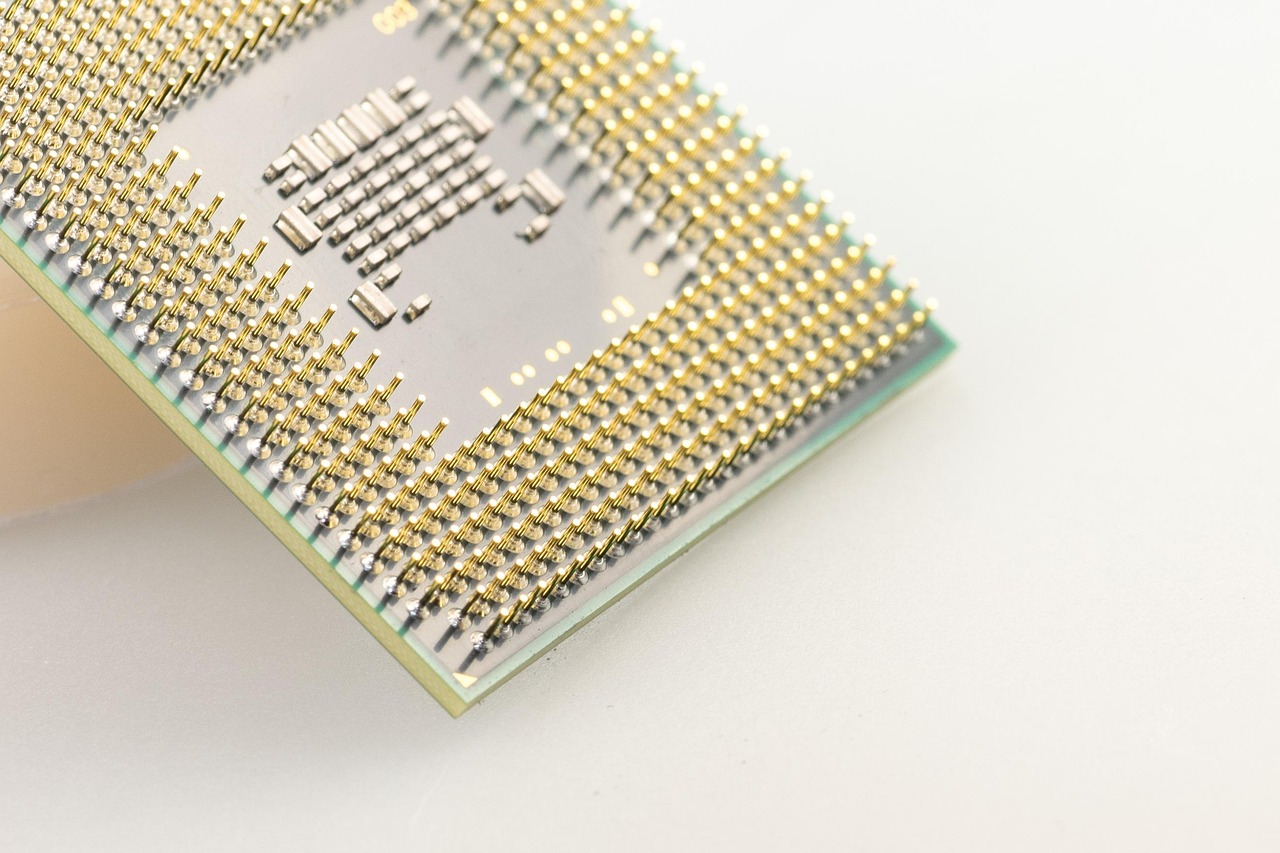
The basic difference between passive and active electrical components
A passive component can influence voltage, current, timing, impedance, heat or electromagnetic behavior, but it does not create signal gain on its own. A resistor can limit current or divide voltage. A capacitor can store charge, smooth ripple or create a timing network. An inductor can store energy in a magnetic field, support power conversion and block high-frequency noise. A fuse or resettable fuse can interrupt or limit current during abnormal conditions.
An active component uses a control signal or supply energy to change the behavior of a circuit. A microcontroller executes software and makes logic decisions. A voltage regulator maintains a stable supply rail. A MOSFET switches a motor, lamp, pump or heater. A transceiver translates signals between communication buses. An image sensor, radar front-end or pressure sensor module can convert physical inputs into electrical data used by vehicle controllers.
The boundary is not always described in the same way in circuit theory, sourcing and qualification. For example, a simple diode may not provide power gain in the way an amplifier does, but in automotive component qualification it is usually handled as a discrete semiconductor rather than as a passive part. For procurement teams, that practical distinction matters because the relevant qualification documents, failure mechanisms and supplier data packages are different.
| Category | Typical automotive examples | Main circuit roles | Common qualification reference |
|---|---|---|---|
| Passive components | Resistors, capacitors, inductors, ferrites, transformers, fuses | Filtering, timing, energy storage, current limiting, sensing networks, protection | AEC-Q200 for passive components |
| Active components | ICs, microcontrollers, power semiconductors, transistors, regulators, sensors, optoelectronics | Switching, regulation, computation, communication, amplification, sensing | AEC-Q100 for ICs; AEC-Q101, Q102, Q103 and Q104 for related device families |
How passive and active parts work together in vehicle systems
A useful way to understand the relationship is to follow a signal or power rail through a vehicle module. In a body control module, a microcontroller may be the active decision-making device, but it depends on decoupling capacitors to reduce supply noise, pull-up or pull-down resistors to define logic states, transient protection to survive electrical disturbances, and filters to protect sensitive inputs. Without that passive network, the active controller may pass a bench test but fail in a noisy harness or under a cold-crank event.
In power electronics, the pairing is even more visible. A switch-mode power supply uses active switching devices and controller ICs, but its output quality depends on inductors, capacitors, resistors, current-sense elements and compensation networks. In an inverter, power semiconductors do the switching, while bus capacitors, gate resistors, snubbers, thermistors and filters manage stress, timing, thermal behavior and electromagnetic interference.
Sensor circuits show the same point. A wheel-speed sensor, pressure sensor or temperature-sensing circuit may contain active signal conditioning, while passive elements set filtering, biasing and protection. The sensor value seen by the electronic control unit is not determined by the active device alone. It is shaped by the full signal chain, connector environment, harness routing, grounding strategy and software interpretation.
Why automotive qualification changes the decision
In consumer electronics, purchasing discussions often focus on cost, package size and electrical rating. In automotive electronics, those points still matter, but they are not enough. Vehicle components face long service expectations, vibration, thermal cycling, humidity, electrical transients, assembly stresses and supply-chain traceability requirements. Automotive design teams therefore need to know not only what a component does, but also how it has been qualified and where it will be mounted.
The Automotive Electronics Council separates several component families in its public document list. AEC-Q200 is used for passive components. AEC-Q100 is used for integrated circuits. AEC-Q101 covers discrete semiconductors, AEC-Q102 covers optoelectronic semiconductors, AEC-Q103 covers sensors, and AEC-Q104 covers multichip modules. This separation reflects different failure mechanisms. A multilayer ceramic capacitor, a polymer capacitor, a shunt resistor, a power MOSFET and a microcontroller do not fail for the same reasons, even when they sit on the same printed circuit board.
Environmental context is just as important. ISO 16750-1:2023 describes environmental stresses and test requirements for electric and electronic systems and components in road vehicles, including electric propulsion systems and components in voltage class B, with attention to mounting location. That point is practical: a component inside a protected cabin module does not see the same combination of temperature, moisture, vibration and chemical exposure as a component near the engine, chassis, battery pack or exterior lighting area.
For safety-related systems, ISO 26262-5:2018 focuses on product development at the hardware level for safety-related electrical and electronic systems in series production road vehicles. It addresses hardware safety requirements, hardware design, architectural metrics, random hardware failures, and integration and verification. In simple terms, functional safety is not achieved by selecting one qualified active device or one robust passive component. It depends on the architecture, diagnostics, fault assumptions, verification evidence and operating context.
Design trade-offs for passive components
Passive components can look simple on a schematic, but their real behavior is often more complex in a vehicle. Capacitors have equivalent series resistance, equivalent series inductance, voltage bias behavior, temperature dependence and aging patterns. Inductors can saturate under current peaks. Resistors have tolerance, temperature coefficient, pulse capability and power derating limits. Fuses and resettable protection devices must be chosen for both normal load behavior and abnormal fault energy.
Package size is another trade-off. Smaller components help reduce board area, but a smaller package may have lower pulse capability, reduced voltage spacing, less mechanical robustness or higher assembly sensitivity. In high-density modules, the design team may need a larger passive component not because the nominal value requires it, but because the thermal, vibration, surge or lifetime requirement does.
Placement also matters. A decoupling capacitor placed too far from an IC power pin may not suppress the intended high-frequency disturbance. A current-sense resistor with poor layout can create measurement errors. A filter may look correct in simulation but become ineffective when harness inductance, connector resistance, ground offsets and electromagnetic coupling are considered. Passive selection is therefore both a component decision and a layout decision.
Design trade-offs for active components
Active components usually attract more attention because they carry the visible intelligence of a module. A microcontroller may define features, diagnostics and communication behavior. A power semiconductor may determine switching speed, heat generation and load capability. A regulator may decide whether downstream devices receive a stable voltage during cranking, load dump or other electrical disturbances.
Active devices also bring constraints of their own. They need supply rails, startup sequencing, thermal paths, software or configuration control, communication compatibility and protection against abnormal conditions. A device that meets its datasheet limits in isolation may still be unsuitable if the surrounding circuit allows voltage overshoot, insufficient heat spreading, reverse polarity stress, ground bounce or uncontrolled transient energy. See also: Buying Guides.
For semiconductors, the important questions often include temperature grade, package thermal resistance, safe operating area, short-circuit behavior, electrostatic discharge robustness, diagnostic coverage and lifecycle availability. For ICs used in safety-related systems, the device data may also need to support hardware safety analysis. This does not mean every active component must be the most complex or highest-rated option. It means the rating and evidence must match the function and risk of the circuit.
A practical checklist for automotive electrical component review
When comparing passive and active parts, a shared checklist helps avoid a narrow focus on unit price or nominal electrical value. The following questions are useful during schematic review, sourcing discussion and supplier documentation checks.
- Function: Is the part filtering, storing energy, sensing, switching, regulating, protecting or computing?
- Category: Is it treated as passive, discrete semiconductor, IC, optoelectronic device, sensor or module for qualification purposes?
- Automotive evidence: Is there suitable AEC qualification data for the component family, not just a generic claim of automotive use?
- Mission profile: Do temperature, voltage, current, duty cycle, vibration and expected lifetime match the actual vehicle location?
- Derating: Are voltage, current, power, temperature and pulse stresses below practical limits with margin?
- Layout dependence: Does the component require special placement, grounding, creepage, clearance, heat spreading or Kelvin sensing?
- Failure behavior: What happens if the component opens, shorts, drifts, leaks, saturates or loses communication?
- Supply continuity: Is the package, material set or silicon process expected to remain available through the program life?
For more background articles in this topic area, see the Electrical Components section.
Trends making the distinction more important
Electrification, driver assistance, connected vehicles and more centralized computing architectures are increasing the interaction between passive and active components. Higher power levels create stronger requirements for capacitors, magnetics, power semiconductors, isolation, sensing and thermal design. More cameras, radar units, lidar-related hardware, ultrasonic sensors and control units increase the need for clean power, stable references and protected communication links.
NHTSA’s public automated vehicle safety material notes that advanced vehicle safety technologies depend on electronics, sensors and computing power. That statement points to the active side of the system, but the supporting passive network is just as important for reliable operation. A processor cannot make a correct decision if its sensor input is distorted by noise, if its supply rail resets during a transient, or if a switching device creates electromagnetic interference that affects nearby circuits.
Electric and hybrid vehicles add another layer. United Nations Regulation No. 100 concerns approval requirements related to the electric power train, which reflects the safety significance of high-voltage vehicle systems. At component level, this does not turn every capacitor, resistor or semiconductor into a high-voltage safety device. It does mean that isolation, voltage rating, creepage, clearance, thermal behavior and fault containment become more visible in design reviews for propulsion, charging and battery-related electronics.
Common mistakes to avoid
The first mistake is treating passive components as interchangeable commodities. Two capacitors with the same capacitance and voltage rating can behave differently under DC bias, ripple current, temperature and aging. Two resistors with the same resistance can differ in pulse withstand, temperature coefficient and long-term drift. A component that is electrically correct at room temperature may not be robust enough for its mounting location.
The second mistake is assuming that an active device qualification automatically protects the full circuit. A qualified IC can still fail in application if the input network, power supply, grounding or thermal design is weak. Conversely, a robust passive network cannot compensate for an active device used outside its safe operating area.
The third mistake is ignoring classification language in the bill of materials. If a diode, optocoupler, sensor or power switch is casually grouped with passives, the wrong qualification expectation may be applied. Clear classification helps buyers, engineers and quality teams request the correct documentation and compare suppliers on a like-for-like basis.
Frequently asked questions
Is a diode passive or active in automotive electronics?
It depends on the context. In basic circuit discussion, a simple diode does not provide power gain. In automotive qualification and sourcing, however, diodes are normally treated as discrete semiconductors rather than passive components. That is why AEC-Q101 is more relevant than AEC-Q200 for many diode selections.
Are automotive sensors active components?
Many modern automotive sensors include active electronics for signal conditioning, diagnostics or communication. Some sensing elements may be resistive, capacitive, inductive or piezoelectric, but the finished sensor module often requires power and produces a conditioned signal or digital output. The practical classification should follow the purchased component and its qualification route.
Does AEC qualification prove a component will work in every vehicle?
No. AEC qualification is important evidence, but it is not a substitute for application validation. The design still has to consider mission profile, mounting location, derating, layout, thermal behavior, system faults and customer-specific requirements.
Which category is more important in EVs and ADAS systems?
Neither category is more important by itself. EVs and ADAS systems rely on active devices for switching, sensing, communication and computation, while passive components provide filtering, energy storage, protection, timing and signal stability. Reliable vehicle electronics come from the way both categories are selected and integrated.
Conclusion
The difference between passive and active electrical components is more than a textbook definition in automotive electronics. Passive parts manage energy, noise, timing and protection. Active parts control, switch, regulate, sense and compute. The real design challenge is making them work together under automotive environmental, safety and lifecycle constraints. For engineers, buyers and technical readers, the most useful question is not simply whether a part is passive or active, but whether its role, qualification evidence and application limits match the vehicle system where it will be used.