Passive electrical components in automotive electronics and what to check
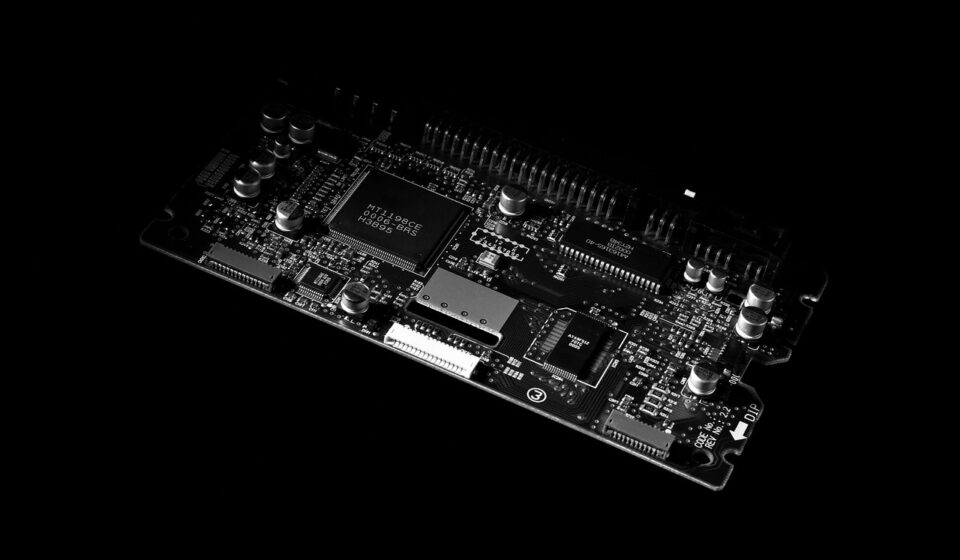
What passive electrical components do in a vehicle
Passive electrical components are parts that do not create electrical gain or generate power by themselves. In automotive electronics, they store, dissipate, filter, limit, sense, or transfer energy so active devices such as microcontrollers, sensors, drivers, and power semiconductors can operate reliably. Common examples include resistors, capacitors, inductors, transformers, thermistors, varistors, resettable fuses, ferrites, and crystals.
Their role goes beyond basic circuit function. In a vehicle, these parts must tolerate temperature swings, vibration, humidity, electrical transients, and long service-life expectations. For readers comparing component categories across vehicle electrical systems, the Electrical Components section provides related background on automotive electrical parts.
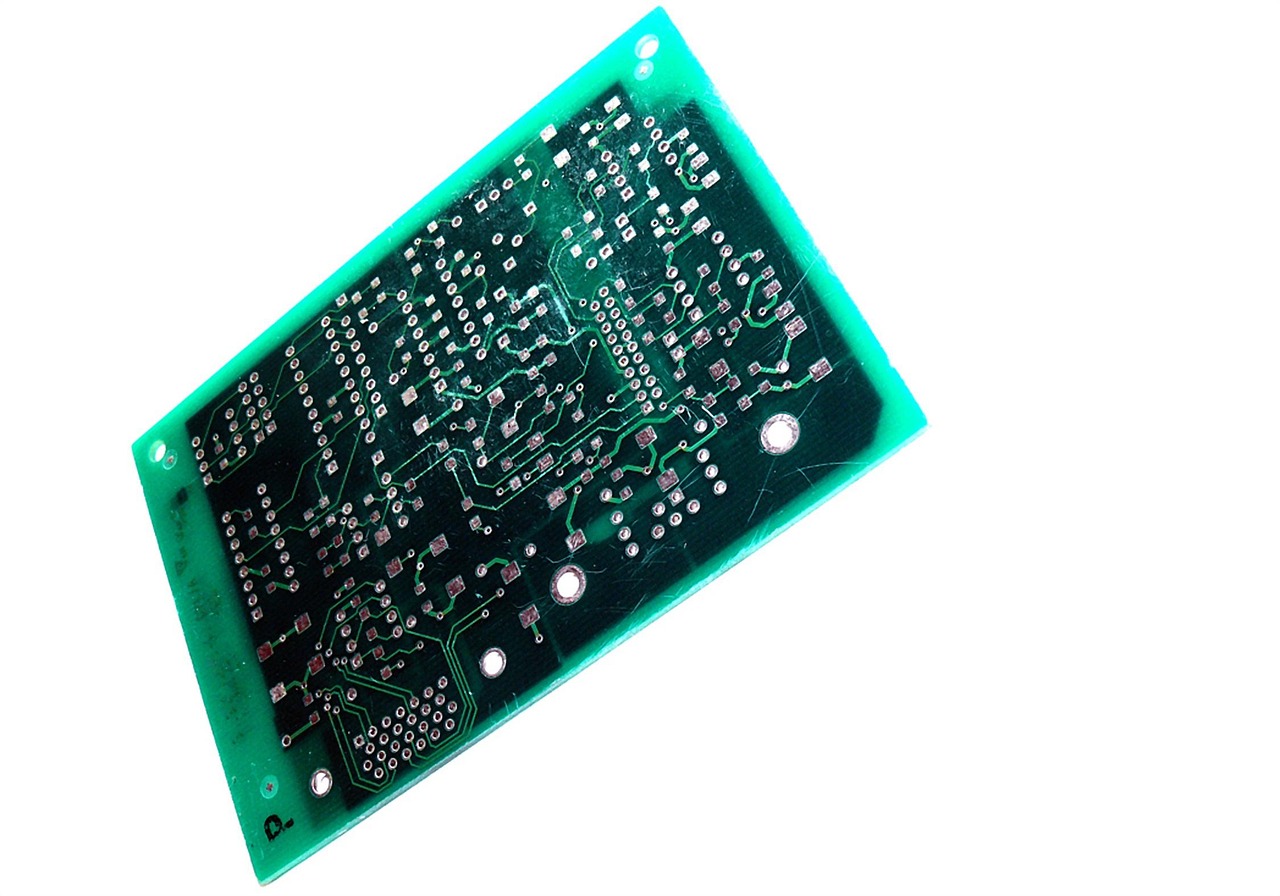
The practical point is straightforward: passive parts are not secondary parts. A low-cost capacitor, current-sense resistor, choke, or thermistor can determine whether a circuit stays quiet, accurate, protected, and stable under real driving conditions.
Main types of passive components used in automotive circuits
Passive components are selected by function, material, package, rating, tolerance, and qualification evidence. The same nominal value can behave differently depending on temperature, frequency, mechanical stress, and ageing. For this reason, automotive engineers rarely select these parts by capacitance, resistance, or inductance alone.
Resistors
Resistors set currents, divide voltages, terminate communication lines, pull signals up or down, and sense current. In automotive power electronics, low-ohm shunt resistors are used where accurate current measurement is required. In control modules, precision resistors can affect signal accuracy, while high-power resistors may support pre-charge, discharge, or load-dumping paths depending on the circuit architecture.
Important checks include resistance tolerance, temperature coefficient, long-term drift, pulse capability, power rating at the actual board temperature, sulfur resistance for harsh atmospheres, and solder-joint robustness. A resistor that is acceptable in a consumer device may drift too much or overheat when placed near a motor driver, lighting module, battery management circuit, or under-hood assembly.
Capacitors
Capacitors provide decoupling, filtering, timing, energy buffering, and noise suppression. Multilayer ceramic capacitors are widely used near integrated circuits because they are compact and effective at high frequencies. Electrolytic and polymer capacitors may be used where larger bulk capacitance is required. Film capacitors are common in some power conversion and suppression roles where stability, ripple current, or voltage stress is important.
Selection should consider rated voltage, derating, capacitance change with DC bias, equivalent series resistance, ripple current, insulation resistance, temperature class, and failure mode. Ceramic capacitors also need attention to board flex and mounting stress because cracking can create intermittent or short-circuit failures. In high-reliability automotive boards, placement and land pattern can matter as much as the datasheet value.
Inductors, chokes, ferrites, and transformers
Inductors and chokes store magnetic energy and oppose rapid current change. They are used in DC-DC converters, input filters, output filters, motor-related circuits, and electromagnetic interference control. Ferrite beads and common-mode chokes help reduce conducted noise on power and signal lines. Transformers appear in isolated power conversion, pulse coupling, and communication-related circuits depending on system design.
Key checks include saturation current, DC resistance, core loss, temperature rise, shielding, acoustic noise, isolation rating where applicable, and mechanical resistance to vibration. A part that meets inductance at room temperature may perform differently after heating, under ripple current, or near magnetic fields from nearby power components.
Protection and sensing passives
Varistors, thermistors, resettable fuses, and some suppression components protect circuits or help measure operating conditions. Varistors can clamp overvoltage events within their intended energy limits. NTC thermistors are common for temperature sensing or inrush control, while PTC devices may provide resettable overcurrent protection in selected circuits. Crystals and resonators provide timing references and are included within passive component qualification discussions in automotive standards.
These parts are often small, but their failure behavior matters. Protection devices must be chosen for the specific pulse, energy, temperature, and ageing profile expected in the vehicle. Timing components must be evaluated for stability, vibration sensitivity, and start-up behavior across the full application range.
Why automotive selection is different from general electronics
Automotive electronics face a broader stress profile than many indoor electronics. A control unit may see cold starts, engine-bay heat, vibration, moisture, supply dips, reversed battery conditions, jump-start events, conducted transients, and assembly process stress. The exact exposure depends on mounting location, vehicle architecture, and customer requirements.
The ISO 16750 series is often used as a reference framework for environmental conditions and testing of electrical and electronic equipment in road vehicles. ISO 16750-1:2023 covers general environmental stress concepts and requirements by vehicle mounting location. ISO 16750-2:2023 addresses electrical loads, including supply voltage conditions and related electrical stress topics. ISO 16750-3:2023 addresses mechanical loads. ISO 7637-2:2011 is also relevant for conducted electrical transients on supply lines in 12 V and 24 V vehicle systems.
These standards do not replace design judgment. They help define test environments and expectations, but the component still has to match the real circuit. For example, a capacitor may pass a temperature test yet be a poor choice if its effective capacitance falls sharply under DC bias. A current-sense resistor may have the right ohmic value but create measurement error if its temperature coefficient is too high. An inductor may satisfy room-temperature inductance but saturate under peak current.
What AEC-Q200 does and does not prove
AEC-Q200 is the main automotive qualification reference for passive components. The Automotive Electronics Council lists AEC-Q200 Rev E as Stress Test Qualification for Passive Components, and the Rev E document is dated March 20, 2023. It covers passive component qualification through stress tests and related criteria. Component families include resistors, capacitors, inductors, transformers, varistors, thermistors, crystals, resonators, and resettable fuses, with test details varying by component type.
The most useful way to read AEC-Q200 is as a qualification baseline, not as a guarantee that a part will succeed in every vehicle circuit. The specification defines minimum stress-test-driven qualification requirements, but it does not remove the supplier responsibility to meet internal qualification programs or additional customer requirements. It also does not replace application approval by the user. In practical terms, an AEC-Q200-qualified capacitor, resistor, or inductor is a better starting point for automotive selection than a general-purpose part, but it still needs application-level review.
Engineering and sourcing teams should ask which revision was used, which component family was qualified, what temperature grade applies, whether the package and materials match the approved qualification family, and whether process or material changes require requalification. A vague automotive-grade label is not the same as a traceable qualification record. See also: Buying Guides.
A practical selection matrix for sourcing reviews
The following matrix organizes typical review points before a passive component is approved for an automotive electronics design. It is not a substitute for engineering validation, but it helps prevent common sourcing and documentation gaps.
| Component group | Common automotive role | Selection checks | Typical risk if overlooked |
|---|---|---|---|
| Resistors | Current sensing, voltage division, biasing, termination, discharge | Tolerance, TCR, pulse rating, power derating, sulfur resistance, long-term drift | Measurement error, overheating, resistance shift, open circuit |
| Capacitors | Decoupling, filtering, timing, bulk storage, suppression | Voltage derating, DC bias, ESR, ripple current, temperature class, board-flex robustness | Loss of capacitance, cracking, leakage, short circuit, unstable regulator behavior |
| Inductors and chokes | DC-DC conversion, EMI filtering, current smoothing | Saturation current, temperature rise, DCR, shielding, vibration behavior, core material | Excess heat, converter instability, noise, reduced filtering |
| Varistors and resettable fuses | Overvoltage and overcurrent protection | Pulse energy, clamping behavior, hold current, trip behavior, ageing, operating temperature | Insufficient protection, nuisance trips, permanent degradation |
| Thermistors and timing parts | Temperature sensing, compensation, inrush control, clock reference | Accuracy, response time, stability, ageing, vibration sensitivity, start-up behavior | Incorrect sensing, unstable timing, protection delay |
A good review also checks the datasheet against the actual mission profile. That includes continuous and peak voltage, continuous and pulse current, ambient and board temperature, expected vibration level, humidity exposure, soldering profile, cleaning process, conformal coating compatibility, and end-of-life behavior. The best component choice is often the one with sufficient electrical margin and clear qualification documentation, not simply the smallest or cheapest part that fits the schematic.
Common failure modes and how design teams reduce risk
Passive component failures often appear as system-level symptoms. A drifting resistor may look like a sensor-calibration problem. A cracked ceramic capacitor may appear as an intermittent short. An inductor approaching saturation may show up as heat, noise, or converter instability. A degraded protection device may not be noticed until a transient event occurs.
Risk reduction starts with derating. Components should not be operated continuously at their absolute maximum ratings unless the manufacturer and application validation support that use. Voltage, current, power, temperature, ripple, and mechanical stress all require margin. Thermal layout is also important because passive parts generate heat and absorb heat from nearby semiconductors, connectors, and power traces.
Mechanical design is another major factor. Larger ceramic capacitors may need careful placement away from board edges, screw holes, and high-flex areas. Current-sense resistors need copper area for heat spreading and layout symmetry for accurate sensing. Inductors and transformers need secure mounting and clearance from sensitive signals. Protection devices need paths that can handle the expected fault or pulse energy without damaging the printed circuit board.
Documentation closes the loop. Automotive programs usually require part-number control, manufacturing-site control, change notification, qualification evidence, and traceability. If a supplier changes a material, process, package, termination, or production site, the component may need review or requalification depending on the change and customer agreement.
Passive components in electrified and software-defined vehicles
As vehicles use more electronic control, sensing, connectivity, lighting, and power conversion, passive components become more numerous and more application-specific. Electrified platforms add high-current and high-voltage design areas, while software-defined architectures increase the importance of stable power rails, accurate sensing, and clean communication lines. Passive parts support these goals by controlling impedance, filtering noise, setting time constants, and protecting interfaces.
However, passive components alone do not make a vehicle electrically safe. Vehicle-level requirements, insulation design, fault detection, enclosure design, grounding strategy, and validation all matter. In the United States, Federal Motor Vehicle Safety Standard No. 305 addresses electric-powered vehicles, electrolyte spillage, and electrical shock protection. That regulation is a vehicle-level safety framework, not a component selection checklist. Passive components can support safety-related circuit behavior, but the full system must be designed and validated against applicable standards and customer requirements.
For buyers and content readers in the automotive parts sector, the practical takeaway is to evaluate passive components as reliability-critical electrical parts. The right question is not only whether a component works on the schematic, but whether it can keep working after automotive electrical, thermal, mechanical, and manufacturing stress.
Frequently asked questions
What is the difference between passive and active electrical components?
Passive components do not provide electrical gain or generate power by themselves. They resist, store, filter, sense, protect, or transfer electrical energy. Active components, such as transistors, integrated circuits, and power switches, can control current flow with gain or switching action when powered by a circuit.
Are all passive electrical components automotive grade?
No. Many passive components are intended for consumer, industrial, telecom, or general electronics use. Automotive-grade selection usually requires wider environmental review, qualification evidence such as AEC-Q200 where applicable, and approval for the actual application.
Is AEC-Q200 mandatory for every automotive passive component?
AEC-Q200 is widely used as an automotive qualification reference for passive components, but whether it is mandatory depends on the vehicle maker, tier supplier, application, region, and purchase specification. In many programs, it is treated as a baseline requirement or a strong expectation.
Can a non-AEC-Q200 component be used in a vehicle circuit?
It may be possible in some non-critical or specially justified applications, but it increases the burden on the designer and purchaser to prove suitability through testing, documentation, and customer approval. For production automotive electronics, using a clearly qualified part is usually the safer starting point.
Which passive components are most important in automotive electronics?
Importance depends on the circuit. Current-sense resistors, decoupling capacitors, EMI chokes, protection devices, thermistors, timing components, and power-conversion magnetics often have a direct impact on measurement accuracy, electrical noise, thermal behavior, protection response, and system reliability.