How a V8 engine works and why it still matters in modern vehicles
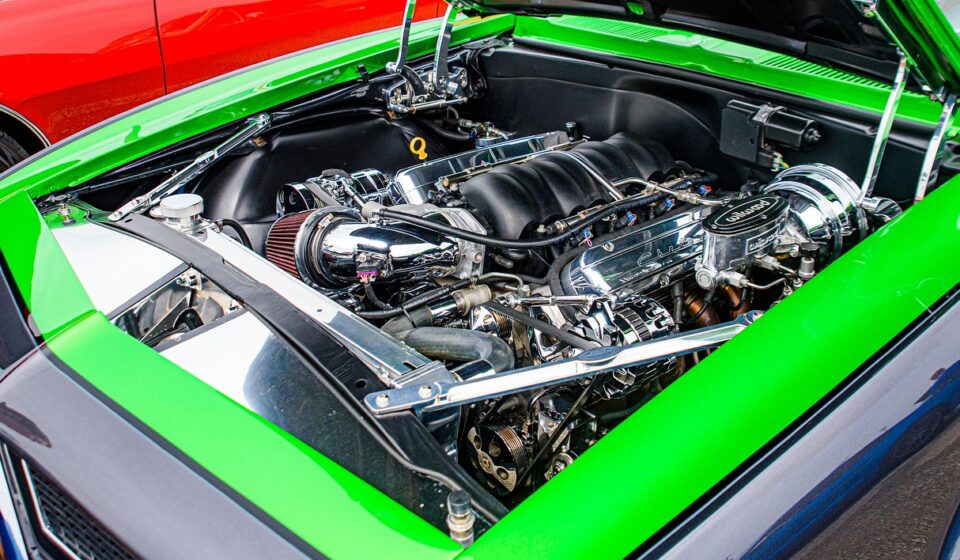
A v 8 engine is an internal combustion engine with eight cylinders arranged in two banks, usually in a V shape around a shared crankshaft. Its main advantage is straightforward: it can deliver strong torque and smooth power while using less length than an inline eight-cylinder layout. That packaging benefit is one reason V8 engines still appear in pickups, performance cars, SUVs, marine applications, and some commercial vehicles.
The design also brings practical costs. A V8 can add weight, heat, fuel consumption, emissions complexity, and maintenance work. For buyers, technicians, and parts suppliers, the question is not whether a V8 is automatically “better” than a smaller engine. The better question is whether its torque output, duty cycle, packaging, cooling capacity, and service requirements match the vehicle’s actual use.
What defines a V8 engine
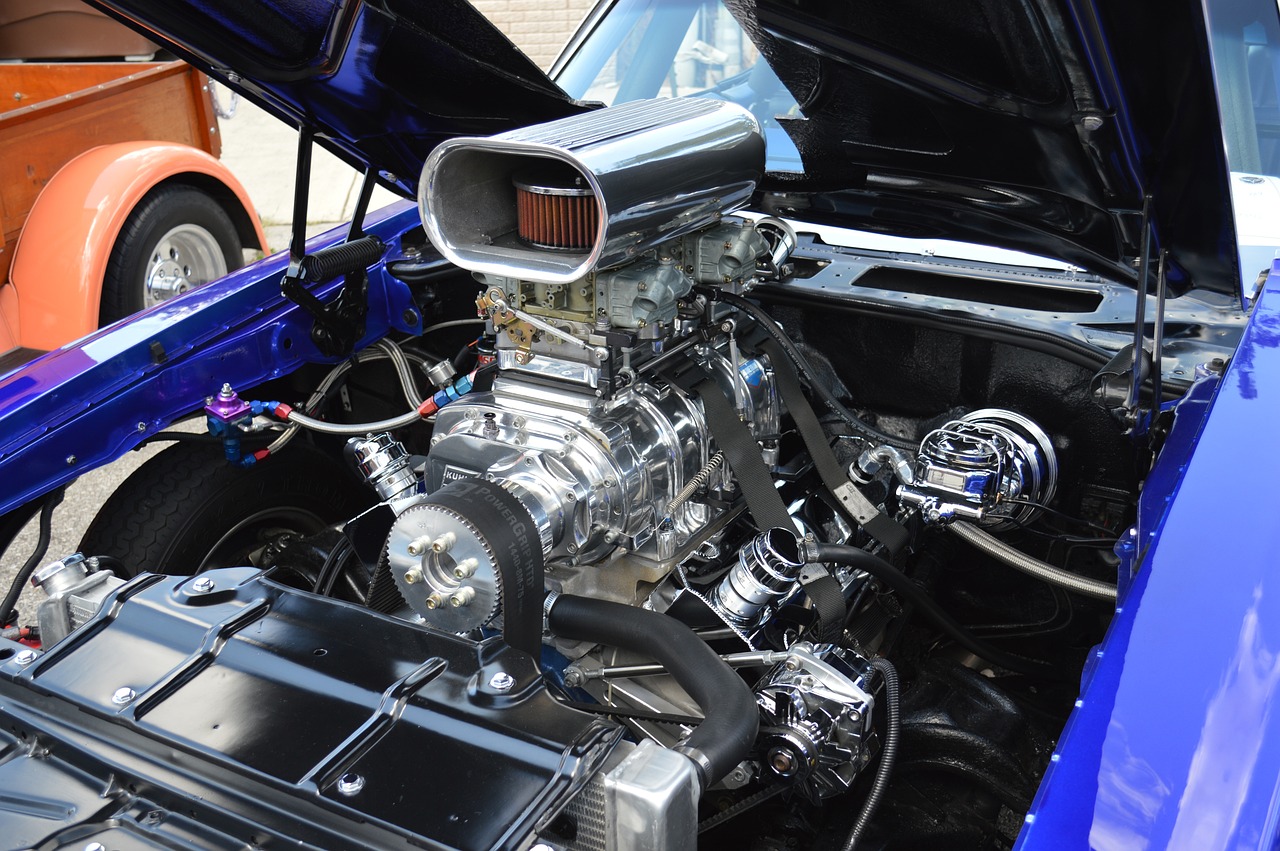
A V8 engine has eight cylinders divided into two banks of four. The banks sit at an angle to each other, and the pistons drive a common crankshaft. Most gasoline V8 engines are four-stroke spark-ignition engines, so each cylinder goes through intake, compression, combustion and power, and exhaust strokes. The U.S. Department of Energy describes the basic internal combustion process as fuel and air burning inside the engine, pushing pistons that turn the crankshaft and ultimately move the vehicle.
The V layout is what separates a V8 from an inline engine. An inline eight-cylinder engine would be long, which makes it difficult to package in many passenger vehicles. A V8 shortens the engine block by placing the cylinders in two banks. That gives engineers more room in a front-engine vehicle for accessories, cooling hardware, intake systems, exhaust manifolds, and crash structure.
V8 engines are not a single design. They vary by displacement, block material, valvetrain design, fuel injection system, crankshaft type, aspiration, and intended duty cycle. A naturally aspirated truck V8 tuned for low-speed torque is very different from a high-revving performance V8, even when both engines have eight cylinders.
How a V8 engine produces power
A V8 follows the same basic working cycle as other piston engines. Air and fuel enter the cylinder, the piston compresses the mixture, a spark plug ignites it in most gasoline designs, and the expanding gases push the piston downward. Connecting rods transfer that movement to the crankshaft, converting up-and-down motion into rotation.
With eight cylinders, power events can be spread more frequently across crankshaft rotation. Instead of depending on fewer, larger combustion events, a V8 can deliver a series of pulses that feel strong and smooth. This is a major reason V8 engines are valued for towing, hard acceleration, and relaxed highway cruising.
Two design details have a strong influence on V8 character:
- Displacement: Larger displacement generally allows more air and fuel to be burned per cycle, supporting higher torque. Final output still depends on breathing, compression ratio, fuel quality, calibration, and forced induction.
- Crankshaft layout: Many traditional V8 engines use a cross-plane crankshaft, which helps create smooth operation and the familiar V8 exhaust rhythm. Some performance engines use a flat-plane crankshaft to reduce rotating mass and improve high-rpm response, although this often brings more vibration.
Modern V8 performance also depends heavily on airflow and control systems. Variable valve timing, direct fuel injection, electronically controlled throttles, cylinder deactivation, improved cooling, and advanced engine control modules allow newer V8 engines to operate more flexibly than older carbureted designs. According to U.S. Department of Energy materials on advanced combustion and engine efficiency, manufacturers have used combustion research, improved valve control, and emissions systems to increase efficiency while maintaining drivability.
Where V8 engines still make sense
The strongest case for a V8 engine is sustained torque. A smaller turbocharged engine can produce impressive peak figures, but vehicles that tow, haul, climb grades, or operate for long periods under load often benefit from displacement, cooling capacity, and a broad torque curve. This is why V8 engines remain relevant in full-size pickups, large SUVs, performance cars, work vehicles, and specialty applications.
A V8 can also provide a driving character that smaller engines do not easily copy. Throttle response, exhaust sound, low-rpm pull, and the sense of mechanical effort are part of its appeal. For enthusiasts, those qualities are often part of the purchase decision, not just a side benefit.
For parts buyers and service teams, V8 engines can offer another practical advantage: many popular engine families have long production histories and strong aftermarket support. Common wear items, sensors, gaskets, ignition parts, cooling components, timing parts, and fuel-system parts are often widely available. For related component topics, see the engine parts section.
Still, a V8 is not the right answer for every vehicle. If a car is used mainly for city commuting, fuel cost and packaging may matter more than peak torque. If a vehicle platform is designed around electrification, a smaller combustion engine or no combustion engine at all may fit the design better.
Key parts that shape V8 reliability
Because a V8 engine has more cylinders than a four-cylinder or six-cylinder engine, it usually has more moving parts, more ignition components, more sealing surfaces, and more heat to manage. Reliability depends less on cylinder count alone and more on design quality, maintenance, operating conditions, and parts condition.
Oil and lubrication parts
Oil pumps, filters, pickup tubes, gaskets, seals, and oil coolers are critical. A V8 used for towing or performance driving can expose oil to higher heat and load. Low oil level, restricted flow, poor-quality filters, or extended service intervals can accelerate wear on bearings, camshafts, lifters, timing chains, and valvetrain components.
Cooling system parts
Radiators, thermostats, coolant pumps, hoses, fans, and temperature sensors matter because V8 engines generate substantial heat. Cooling problems can damage head gaskets, warp components, shorten oil life, and trigger knock-control limits. On vehicles used for towing, cooling capacity should match the load, climate, and driving pattern.
Ignition and fuel-system parts
Most gasoline V8 engines rely on spark plugs, coils, injectors, fuel pumps, sensors, and electronic control modules to keep combustion stable. Misfires should not be ignored. A small ignition or injector problem can increase fuel consumption, damage catalytic converters, and create drivability issues. See also: Buying Guides.
Airflow and exhaust parts
Intake manifolds, throttle bodies, mass airflow sensors, oxygen sensors, exhaust manifolds, catalytic converters, and exhaust gaskets influence both power and emissions. A leak or sensor fault may reduce performance and cause the engine control module to adjust fuel trim incorrectly.
V8 engine advantages and trade-offs
A fair evaluation of a V8 engine needs both sides of the equation. The same features that make a V8 desirable can also make it more expensive to build, package, fuel, and service.
| Factor | V8 engine strength | Common trade-off |
|---|---|---|
| Torque | Strong low- and mid-range output, useful for towing and performance | Higher fuel use when displacement and load are high |
| Smoothness | Frequent power pulses can create refined acceleration | More parts and more complex exhaust routing |
| Packaging length | Shorter than an inline eight-cylinder engine | Wider than many inline or V6 engines |
| Durability potential | Can be well suited to sustained load when properly cooled and maintained | Heat management and lubrication become especially important |
| Sound and character | Distinct exhaust note and throttle feel | Noise regulations, cabin refinement goals, and emissions systems can limit sound |
Compared with a turbocharged four-cylinder, a V8 often feels less strained under heavy load, while the smaller engine may offer better fuel economy in light-duty driving. Compared with a V6, a V8 often provides more torque and stronger performance headroom, but it usually adds cost and weight. Compared with an electric motor, a V8 cannot match instant zero-rpm torque, but it can refuel quickly and may suit long-distance towing where charging time and infrastructure are important considerations.
How regulations and electrification affect the V8
The future of the V8 engine is selective rather than universal. Emissions standards, fuel-economy requirements, battery-electric platforms, hybrid systems, and customer demand are changing how automakers use large combustion engines. The U.S. Environmental Protection Agency and other regulators have continued to set or revise vehicle emissions requirements by model year and vehicle class, pushing manufacturers to improve combustion efficiency, reduce tailpipe pollutants, and expand electrified options.
That does not mean every V8 will disappear at once. Instead, the role of the V8 is narrowing toward applications where its benefits are easiest to justify: towing, high-performance vehicles, premium models, heavy-duty use, and enthusiast markets. In some cases, hybrid assistance can reduce low-speed fuel use, improve launch torque, or allow the engine to operate more efficiently. In other cases, turbocharged six-cylinder engines or electric powertrains replace V8 engines because they meet the vehicle’s targets with less fuel consumption or different packaging advantages.
For the parts market, this transition has two effects. First, existing V8 vehicles will need maintenance for many years, especially trucks and SUVs with long service lives. Second, the V8 parts mix is becoming more electronically controlled. Sensors, actuators, fuel-system components, emissions hardware, and thermal-management parts are increasingly important alongside traditional mechanical parts.
Buying or servicing a V8 engine wisely
When evaluating a V8-powered vehicle or replacement parts, start with the engine’s real use case. A lightly driven performance car, a work truck towing every week, and a high-mileage SUV used in hot weather place very different demands on the same general engine architecture.
- Check maintenance history: Oil changes, coolant service, spark plug replacement, belt or chain service, and documented repairs matter more than badge reputation alone.
- Inspect for leaks: Valve cover gaskets, oil pan gaskets, rear main seals, coolant hoses, water pumps, and intake gaskets are common inspection points.
- Listen for abnormal noise: Ticking, knocking, timing-chain rattle, exhaust leaks, and bearing noise should be diagnosed before parts are replaced randomly.
- Scan for fault codes: Modern V8 engines depend on sensors and control modules. A scan tool can reveal misfires, fuel-trim issues, oxygen-sensor faults, temperature problems, and emissions-system warnings.
- Match parts to the exact engine code: Similar V8 engines can use different injectors, sensors, gaskets, camshafts, timing parts, and electronic calibrations depending on model year and market.
A V8 rewards correct maintenance because its strengths show most clearly under load. Poor oil quality, overheating, neglected ignition parts, or incorrect sensors can quickly turn a strong engine into an expensive repair. For workshops and parts buyers, accurate engine identification is one of the best ways to avoid returns and repeat labor.
Frequently asked questions
Is a V8 engine always more powerful than a V6?
No. A V8 often has more displacement and torque potential, but power depends on airflow, tuning, fuel system, compression ratio, forced induction, and hybrid assistance. A modern turbocharged V6 can outperform some naturally aspirated V8 engines.
Why do many V8 engines sound different from smaller engines?
The sound comes from firing order, crankshaft design, exhaust manifold layout, displacement, camshaft timing, and exhaust tuning. Cross-plane V8 engines are especially associated with the uneven exhaust rhythm many drivers recognize.
Are V8 engines reliable?
They can be very reliable when properly designed, cooled, lubricated, and maintained. Reliability should be judged by the specific engine family, maintenance record, mileage, operating conditions, and quality of replacement parts.
Do V8 engines use much more fuel?
They often use more fuel than smaller engines, especially in city driving or under heavy acceleration. Technologies such as direct injection, variable valve timing, cylinder deactivation, start-stop systems, and hybrid assistance can reduce the gap, but driving style and vehicle weight remain major factors.
Will V8 engines remain relevant?
Yes, but in fewer and more specific applications. V8 engines still fit towing, performance, luxury, and work-duty roles, while smaller turbo engines, hybrids, and electric powertrains continue to take over use cases where efficiency and packaging are higher priorities.