Perkins engine parts guide for maintenance, overhaul and replacement
Why Perkins engine parts need more than a part number
Ordering Perkins engine parts is rarely as simple as copying the number from an old filter, pump, belt or gasket. Perkins engines have been produced across many series, ratings and application-specific builds, so the safest starting point is the full engine serial number, the build information and the correct operation and maintenance manual. For fleet owners, repair shops and parts buyers, the immediate objective is to reduce downtime. The longer-term objective is just as important: avoid fitment, performance or emissions problems caused by a part that looks right but is not correct for the engine. This guide explains how to identify the right parts, which categories need extra attention, and when maintenance items, repair parts or overhaul kits are the better option. For broader component topics, see our engine parts section.
Start with the engine serial number and manual
Perkins’ official parts and service information emphasizes that each engine has a unique serial number. In practical terms, that number links the physical engine in the machine to the parts data needed to support it. A single engine family can include different build lists, power ratings, accessory layouts, emissions packages and customer-specific specifications. If a buyer searches only by a general model name, several parts may appear similar even though they are not interchangeable.
What the serial number helps verify
The serial number helps identify the engine family and type code, the build list and the correct parts information for that particular engine. This matters on engines installed in generators, agricultural machines, construction equipment, forklifts and industrial units, where the engine may have been packaged by an OEM with specific brackets, cooling layouts, sensors or wiring. Before ordering, record the full serial number from the engine data plate, not just the marketing model or the machine model.
If the data plate is damaged or unreadable, use the best available supporting evidence: the machine’s original documentation, a previous parts invoice, the operation and maintenance manual, or clear photographs of the engine from several angles. Even with that information, uncertain identification should be treated as a real purchasing risk. Returning a wrong part is usually less costly than installing a wrong part and then dealing with leakage, poor fuel delivery, overheating or an aftertreatment fault.
Why the operation and maintenance manual matters
Perkins states that operation and maintenance manuals cover safety, product information, operation, maintenance schedules, refill capacities, fluid recommendations and service procedures. These details affect parts selection directly. An oil filter decision, for example, is not complete unless the buyer also understands the correct oil grade, service interval and capacity. A cooling system repair is incomplete if the coolant specification or thermostat rating is wrong. The manual is therefore more than a repair reference; it is a compatibility reference.
Common Perkins engine parts and where mistakes happen
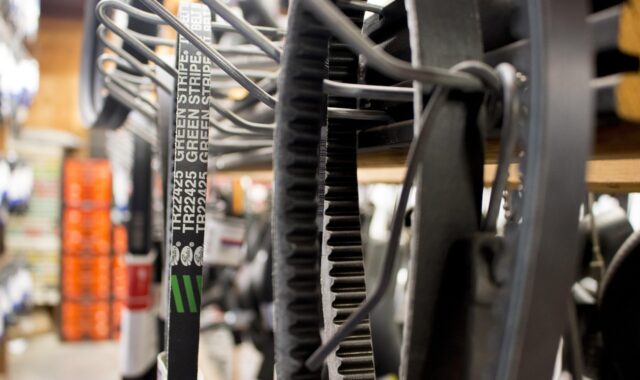
Most routine demand for Perkins engine parts falls into several groups: filtration, lubrication, cooling, fuel delivery, air handling, sealing, electrical control and major overhaul components. Some of these parts look simple, but their specifications can have a large effect on engine life. A fuel filter with the wrong micron rating may fit the housing while allowing contamination levels that are not suitable for the injection system. A belt with a close but incorrect profile may run briefly, then slip, overheat or wear the pulleys.
| Part category | Typical items | Key ordering check | Main risk if incorrect |
|---|---|---|---|
| Filtration | Oil, fuel, air and coolant filters | Match by serial number and service manual specification | Contamination, restricted flow or shortened service life |
| Cooling system | Thermostats, water pumps, hoses, radiators and caps | Check temperature rating, hose routing and engine application | Overheating, coolant loss or poor warm-up control |
| Fuel system | Lift pumps, injectors, injection pumps, seals and lines | Confirm engine family, rating and fuel system type | Hard starting, smoke, power loss or component damage |
| Air and exhaust | Turbochargers, gaskets, manifolds and aftertreatment parts | Verify emissions configuration and sensor layout | Boost faults, leaks, high exhaust temperature or emissions codes |
| Overhaul parts | Pistons, rings, liners, bearings, gaskets, valves and seals | Confirm build list, wear measurements and kit contents | Poor compression, oil consumption or premature rebuild failure |
The table shows why physical fit is only one part of the decision. A component can bolt on and still be wrong for the engine’s operating conditions. Buyers should also be careful when using a removed part from a second-hand engine as the reference. Many engines are repaired several times over their working life, and previous work may have introduced non-original or superseded components.
Genuine, aftermarket and overhaul kits are different decisions
The genuine-versus-aftermarket question is often treated as a price comparison. For engine maintenance, it is more useful to view it as a risk decision. Genuine parts are built to the engine manufacturer’s specification and are normally the lowest-risk choice for warranty-sensitive engines, high-utilization machines, emissions-controlled models and critical applications such as standby power. Aftermarket parts can be suitable in some repair situations, but the buyer still needs to verify specification, manufacturing quality, supplier traceability and return support.
When genuine parts matter most
Genuine parts are especially important where a small difference in material, filtration efficiency, sealing profile or calibration can affect the surrounding system. Fuel injection parts, electronic sensors, aftertreatment sensors, turbochargers, head gaskets, bearings and piston-ring packs deserve extra scrutiny. Perkins’ own parts information warns that non-genuine parts can affect emissions standards, fuel and oil consumption, power output and engine reliability. That does not mean every non-genuine part will fail, but it does mean the choice should not be made by appearance alone.
For routine filters and belts, some buyers compare genuine and aftermarket options. If an aftermarket part is being considered, the comparison should include published specifications, not only dimensions. For filters, check media performance, bypass valve details and application listing. For belts, check profile, length, cord material and pulley compatibility. For gaskets and seals, material quality and surface finish can matter as much as shape.
When an overhaul kit can reduce ordering risk
For a major rebuild, an overhaul kit can reduce the chance of missing small but important components. Perkins has promoted overhaul kits for selected engine ranges and has described kit contents such as gaskets, seals, filters, regulators, belts, pistons and rings, valves, sleeves, pumps and injector components, depending on the package. Exact contents vary by engine series and kit level, so the package should be checked against the repair scope before purchase.
An overhaul kit is not a substitute for inspection. Before ordering pistons, liners, bearings or valve-train components, technicians should measure wear, inspect the block and crankshaft, verify the cause of failure and confirm whether machining is required. If the original problem was overheating, dust ingestion, fuel dilution or lubrication failure, replacing parts without correcting the root cause may lead to repeat failure.
Emissions systems make compatibility more important
Modern Perkins engines may include electronic controls and exhaust aftertreatment, which makes parts selection more sensitive than on older mechanical engines. Perkins product data for engines such as the 904J range lists emissions compliance for markets including EU Stage V and U.S. EPA Tier 4 Final, with aftertreatment configurations that can include diesel oxidation catalyst, diesel particulate filter and selective catalytic reduction depending on model and rating. These systems depend on correct sensors, wiring, exhaust routing, temperature management and fluid quality.
This matters because a repair that appears mechanical can create an emissions or electronic-control issue. An incorrect exhaust gasket can cause a leak that affects temperature readings. A wrong sensor can trigger diagnostic codes. A low-quality air filter can allow dust ingestion that damages the turbocharger or increases oil consumption. A coolant or thermostat mismatch can prevent the engine from reaching stable operating temperature, which may affect aftertreatment performance.
Older mechanical Perkins engines may be more tolerant because they have fewer sensors and no complex aftertreatment, but they still require correct parts. The engine family, build list, rotation, cooling arrangement, fuel pump type and application can all change what fits. The practical rule is the same for old and new engines: identify the engine first, then choose the part. See also: Buying Guides.
A practical checklist before ordering Perkins engine parts
A disciplined ordering process prevents many avoidable delays. It also helps buyers communicate clearly with suppliers, especially when the engine is on a remote jobsite, in a generator room or in an imported machine with incomplete paperwork.
- Record the full engine serial number. Photograph the data plate and write the number exactly as shown, including letters and numbers.
- Identify the engine application. Note whether it is used in a generator set, tractor, excavator, compressor, forklift, marine unit or other equipment.
- Check the operation and maintenance manual. Confirm maintenance intervals, refill capacities, fluid recommendations and service procedures.
- Confirm the part category and failure symptom. A leaking seal, low oil pressure, overheating or hard starting can point to different root causes.
- Compare specifications, not just appearance. Filters, belts, sensors, thermostats and gaskets can look similar while performing differently.
- Check whether the part has been superseded. Engine manufacturers may replace older numbers with updated parts; verify the current replacement path through reliable parts data.
- Consider related parts. A water pump replacement may require gaskets, coolant, hoses or a belt; an injector repair may require seals, lines or calibration steps.
- Document the repair. Keep the part number, invoice, hours, date and technician notes for the next service event.
This checklist is particularly useful for mixed fleets. A company may operate several Perkins-powered machines from different years, and two units with similar model names may still need different components. Good records reduce repeat identification work and help prevent parts from being moved between engines without verification.
How to balance cost, downtime and reliability
The cheapest part is not always the lowest-cost repair, but the most expensive option is not automatically the best choice either. The right decision depends on the machine’s duty cycle, remaining service life, repair urgency and consequence of failure. A standby generator in a hospital, data center or emergency facility deserves a different risk calculation than a lightly used non-critical engine. A farm or construction machine in peak season may justify paying more for a part that can be verified and delivered quickly.
For planned maintenance, buyers have time to compare sources and specifications. For emergency repairs, the priority is often correct identification and availability. Urgency, however, should not remove the verification step. A wrong fuel-system or cooling-system part installed under time pressure can turn a one-day repair into a longer failure investigation.
For older engines, availability can influence the decision. Some parts may be genuine, aftermarket, remanufactured or used. Used components should be treated carefully, especially rotating parts, injectors, pumps, turbochargers and electronic components. If the history is unknown, the savings may disappear quickly if the part has hidden wear or contamination.
Frequently asked questions
How do I identify the right Perkins engine parts?
Start with the full engine serial number from the data plate, then match it to the correct engine family, build list and operation and maintenance manual. Do not rely only on the machine model or a visual comparison with an old component.
Are all Perkins filters interchangeable within the same engine series?
No. Filters can vary by engine build, application, service interval and system requirement. A filter that fits the thread or housing is not automatically correct. Check the service manual and parts data before ordering.
When should I consider a Perkins overhaul kit?
An overhaul kit is useful when the repair scope is broad enough to require matched internal components and sealing parts. It can reduce missed items, but it should be selected only after inspection, measurement and confirmation of the engine build.
Do emissions-controlled Perkins engines need special attention when ordering parts?
Yes. Engines with electronic controls, diesel particulate filters, selective catalytic reduction or related sensors require careful compatibility checks. Exhaust, cooling, air, fuel and sensor parts can all affect emissions performance and diagnostic behavior.
Can aftermarket Perkins engine parts be a reasonable option?
They can be, but only when the supplier can support the application with clear specifications, reliable quality control and traceability. For critical systems, high-duty engines and emissions-sensitive repairs, genuine or manufacturer-approved options usually carry lower risk.
Final ordering principle
The safest way to buy Perkins engine parts is to treat identification as part of the repair, not as a clerical step. The serial number, manual, application and failure symptom should guide the order before price comparisons begin. That approach helps avoid incorrect fitment, repeat downtime and hidden reliability problems. Whether the need is a simple service filter, a cooling-system repair, a fuel-system component or a full overhaul kit, the best result comes from matching the part to the exact engine rather than the closest-looking alternative.