Motorcycle engine parts guide for durability, emissions and fitment decisions
What motorcycle engine parts buyers need to know first
Motorcycle engine parts should be selected around fitment, heat control, lubrication, sealing and emissions compatibility, not price or advertised performance alone. The main groups include pistons, rings, cylinders, valves, camshafts, timing components, crankshafts, connecting rods, bearings, gaskets, oil pumps, sensors and emission-control hardware.
For a street motorcycle, the safest starting point is the original specification for the exact model year, engine code and market version. This matters more on modern motorcycles, where combustion control, oxygen sensors, catalytic converters and onboard diagnostics are closely linked. A part may physically fit but still be wrong if it changes compression, valve timing, fueling, exhaust flow or diagnostic behavior in a way the engine management system was not calibrated to handle.
For readers comparing component categories, related updates are also collected in the engine parts section.
The engine parts that define performance and service life
A motorcycle engine is compact, highly loaded and often operated at higher rpm than a typical passenger-car engine. As a result, small differences in clearance, surface finish, material and installation practice can have a large effect on service life. Engine parts can be grouped by the job they perform inside the engine.
Combustion and sealing parts
Pistons, piston rings, cylinder liners, cylinder blocks and head gaskets control compression and combustion pressure. These parts work under high temperature, rapid direction changes and continuous friction. If piston-to-cylinder clearance is wrong, the result can be piston slap, seizure, oil burning or compression loss. If ring end gap is too tight, the rings may butt together when hot; if it is too wide, blow-by can increase and oil control can suffer.
For repair planning, the key question is not simply whether a piston kit is available. The cylinder condition has to be checked first. A worn, tapered or glazed bore can make a new piston and ring set perform poorly. On plated cylinders, resurfacing options differ from cast-iron liners, so the repair path should match the cylinder construction.
Valve train and timing parts
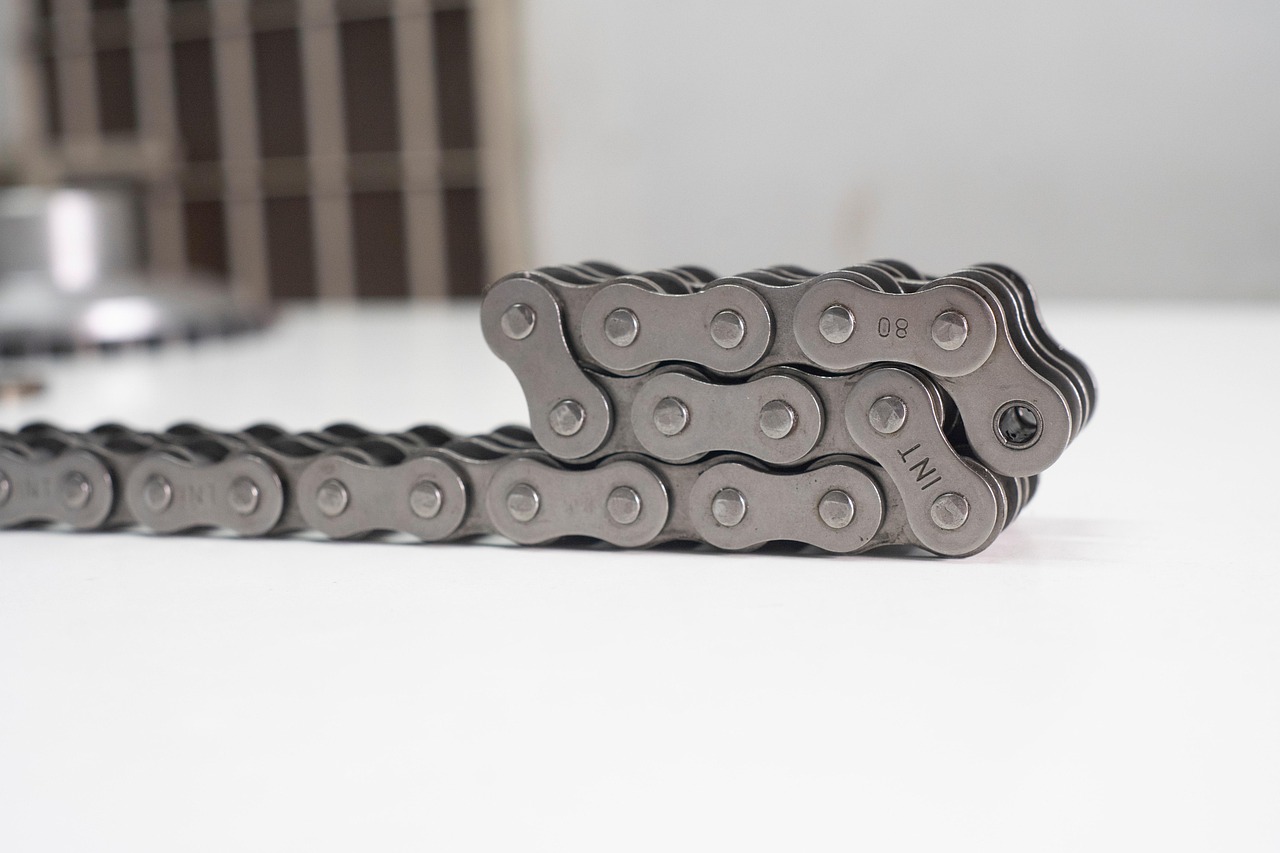
Valves, valve guides, valve seals, springs, camshafts, rocker arms, tappets, timing chains, sprockets and tensioners determine how the engine breathes. Wear in this group can show up as hard starting, loss of power, ticking noise, poor idle or misfire. A timing-chain problem can also become a major failure if the chain jumps teeth and piston-to-valve contact occurs.
Performance camshafts require particular caution. More lift or duration may increase airflow in one operating range, but it can also reduce low-speed response, change idle quality, increase valve-train stress and require fuel or ignition calibration. On emission-controlled street motorcycles, camshaft changes can also affect compliance because they alter combustion behavior and exhaust composition.
Rotating assembly and lubrication parts
The crankshaft, connecting rods, bearings, bushings, balancer shafts, oil pump, oil passages and seals carry the mechanical load of combustion. Failures in this area are often connected to oil starvation, contamination, overheating, incorrect assembly clearance or previous impact damage. A new bearing set cannot compensate for an out-of-round journal, blocked oil passage or misaligned crankcase.
Lubrication is especially important on many motorcycles because the oil may serve the engine, gearbox and wet clutch together. JASO T 903 is widely used for four-stroke motorcycle oils because motorcycle engines and ATV engines can place different friction demands on the lubricant than car engines. SAE J300 classifies engine oil viscosity grades, while JASO categories help address clutch and gear compatibility. In practice, replacement parts and oil choice should be treated as one system, not separate decisions.
Electronic and emission-related parts
Modern motorcycle engines may use oxygen sensors, manifold pressure sensors, throttle-position sensors, coolant-temperature sensors, crank-position sensors, fuel injectors, electronic throttle bodies and catalytic converters. These parts influence fueling, ignition timing, diagnostic codes and emissions. A sensor that looks similar may have a different calibration curve or connector pinout. A catalyst or exhaust component may also be tied to legal requirements in the market where the motorcycle is used.
How emissions rules affect parts choices
Engine parts decisions are increasingly shaped by regulation, especially when parts affect fueling, combustion or exhaust aftertreatment. In the European Union, Regulation (EU) No 168/2013 created the type-approval framework for L-category vehicles, including motorcycles, and included pollutant emission limits, evaporative requirements and onboard diagnostic provisions. Later amendments refined the Euro 5 step and diagnostic requirements. Industry sources often describe the 2025 implementation stage for many motorcycles as Euro 5+, with greater attention on diagnostic monitoring and emission-control durability.
In the United States, the Environmental Protection Agency adopted revised highway motorcycle exhaust standards and evaporative permeation standards in its 2004 final rule for highway motorcycles. The EPA also maintains enforcement policy on tampering and aftermarket defeat devices under the Clean Air Act. That policy is aimed at parts or modifications that bypass, defeat or render emission-control systems inoperative.
California adds another layer through the California Air Resources Board. CARB states that emission-related add-on or modified motorcycle parts may need an anti-tampering exemption, commonly documented through an Executive Order. CARB identifies examples such as fuel injection systems, carburetor re-jetting, aftermarket catalytic converters, performance camshafts and certain gearing changes. Direct replacement parts that are functionally identical to stock parts, such as spark plugs or air cleaner elements, are treated differently, but manufacturers must be able to support equivalency.
The repair implication is clear: an original-equivalent replacement piston, gasket or sensor is mainly a fitment and quality question, while a performance camshaft, fuel controller, exhaust catalyst or ECU-related part may also be a compliance question. The same component can be acceptable in one use case and unsuitable in another, depending on road use, market rules and certification status.
A practical fitment checklist before ordering parts
Most avoidable engine-parts problems begin before installation. The following checklist helps separate basic compatibility from deeper technical risk.
| Part group | What to verify | Why it matters |
|---|---|---|
| Piston and rings | Engine code, bore size, oversize grade, compression height, ring thickness and cylinder material | Prevents poor sealing, piston noise, seizure and incorrect compression ratio |
| Cylinder and head gasket | Bore diameter, cooling type, oil passage alignment, gasket thickness and surface finish requirements | Controls compression, coolant sealing and oil sealing |
| Valves and camshaft | Valve diameter, stem size, spring pressure, cam profile, timing marks and clearance specification | Protects against valve float, contact damage and drivability problems |
| Crankshaft and bearings | Journal size, bearing grade, crank runout, case alignment and lubrication path | Reduces the risk of knock, overheating and bearing failure |
| Oil pump and seals | Pump capacity, relief valve condition, seal material and installation depth | Maintains oil pressure and prevents leaks or oil starvation |
| Sensors and emission parts | Connector type, calibration, model year, market version and legal approval where required | Avoids diagnostic faults, fueling errors and compliance issues |
The model name alone is often not enough. Manufacturers may change engine internals during a production run, or they may sell different calibrations in different markets. When available, use the VIN, engine number, parts catalog reference and measured dimensions together. Measurement is especially important on rebuilt engines because previous repairs may have changed the bore size, head surface height or crank journal grade. See also: Buying Guides.
Quality signals that matter more than marketing claims
Motorcycle engine parts are often promoted with broad terms such as heavy duty, racing grade or high performance. These words are not a substitute for measurable specifications. Better quality evaluation starts with the details that influence heat, friction, fatigue and sealing.
- Material match: Aluminum piston alloy, cast or forged construction, ring coating, gasket layer design and bearing material should suit the engine load and cooling system.
- Machining accuracy: Roundness, flatness, groove width, oil-hole alignment and thread quality affect whether the part can be installed correctly.
- Surface finish: Cylinder wall finish, cam lobe finish, crank journal finish and gasket surface roughness can determine break-in behavior and long-term wear.
- Heat treatment and coating: Valves, camshafts, gears and rings may rely on hardening, nitriding, plating or other surface processes. The process must suit the application, not just sound advanced.
- Traceability: Batch identification, packaging information and consistent dimensions help reduce uncertainty when multiple parts are used in one repair.
Aftermarket does not automatically mean lower quality, and original equipment does not automatically fit every repair situation. The better question is whether the part is correctly specified for the engine, supported by reliable manufacturing control and appropriate for the intended use.
Replacement strategy should address the failure cause
Replacing the broken part is only half of an engine repair. The more important question is why the part failed. A seized piston may point to overheating, lean fueling, detonation, insufficient clearance or lubrication failure. A damaged camshaft may be caused by oil starvation, blocked passages, wrong oil, weak surface hardening or incorrect valve clearance. A blown head gasket may be related to overheating, warped surfaces, improper torque procedure or combustion pressure problems.
For that reason, engine parts are best replaced in systems. A piston repair should include cylinder measurement, ring gap verification, wrist-pin and small-end inspection, gasket replacement and oil-system review. A valve-train repair should include cam, follower, spring, guide, seal and timing-chain checks. A crankshaft repair should include bearing clearance, oil pump condition, case cleanliness and debris inspection.
Installation practice also changes the result. Torque sequence, fastener condition, lubrication during assembly, sealant use, timing alignment and break-in procedure can determine whether a correct part succeeds or fails. Many critical engine fasteners are not designed for unlimited reuse, and service manuals may specify replacement when fasteners are torque-to-yield or otherwise safety-critical.
Market context for replacement demand and availability
Demand for motorcycle engine parts is influenced by more than normal wear. Emissions transitions, model updates and registration patterns can change which parts are needed and when. European motorcycle market data published by industry association ACEM showed that 2024 registrations in major markets were affected partly by stock registrations ahead of the next Euro 5-related stage. ACEM later described 2025 figures as a market adjustment after that transition. This does not prove demand for every part category rose or fell, but it does help explain why certain model-year parts may see uneven availability.
There is also a growing split between routine replacement parts and calibration-sensitive parts. Gaskets, seals, bearings and many stock-equivalent mechanical components remain primarily fitment-driven. By contrast, exhaust aftertreatment, fuel control, oxygen sensors, camshafts and ECU-related items sit closer to the boundary between repair, tuning and compliance. Buyers should treat those categories with more documentation and market-specific checks.
For suppliers, repair shops and technical readers, the useful takeaway is that the motorcycle engine-parts market is not moving in one direction only. Durability needs support demand for precise mechanical replacements, while emissions and diagnostics increase the cost of mistakes for parts that change combustion or exhaust behavior.
Frequently asked questions
What are the main motorcycle engine parts?
The main motorcycle engine parts include pistons, piston rings, cylinders, cylinder heads, valves, camshafts, timing chains or belts, crankshafts, connecting rods, bearings, gaskets, oil pumps, seals, sensors and emission-control components. The exact list depends on whether the engine is two-stroke or four-stroke, air-cooled or liquid-cooled, carbureted or fuel-injected.
Are aftermarket motorcycle engine parts safe to use?
Aftermarket parts can be suitable when they match the correct specification, dimensions, material requirements and intended use. The risk rises when a part changes compression, valve timing, fueling, exhaust flow or emission-control function. For street motorcycles, check whether the part is a stock-equivalent replacement or a modification that may require legal approval in the target market.
Why does model year matter when buying engine parts?
Model year matters because manufacturers may change pistons, sensors, gaskets, cylinder heads, cam profiles or emission hardware during a production cycle. The same motorcycle name can cover different engine codes or regional versions. Engine number, VIN, measured dimensions and service documentation provide a safer match than model name alone.
Can performance engine parts cause diagnostic or emissions problems?
Yes. Parts such as performance camshafts, fuel controllers, modified intake systems, exhaust components and catalytic converters can affect oxygen-sensor readings, combustion temperature, catalyst performance and onboard diagnostics. Some changes may be acceptable for closed-course use but unsuitable or illegal for road use, depending on local rules.
Should parts be replaced individually or as a set?
It depends on the failure. Some parts, such as a gasket or seal, may be replaced individually if the surrounding components are healthy. But piston, valve-train and crankshaft repairs often require related inspections and companion parts. Replacing only the visibly damaged component without addressing the root cause can lead to repeat failure.